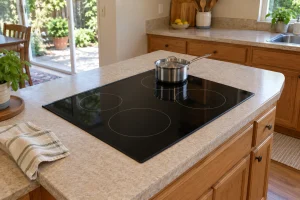
Cooktops
Electric radiant and induction cooktops in Gallery trim show faults as dead zones and display codes. See the models we track, the…

Specialized Frigidaire Appliance Repair in San Francisco
Mon–Sat: 8:00 AM – 7:00 PM
One cold zone or a flashing number does not mean the whole surface is finished. We trace it to the burner, coil or board.
A cooktop looks simple: a glass or metal surface, a few zones or burners, and a set of controls. Underneath, it is a tight package of heating elements or induction coils, switches, sensors and a control board that all sit in a cutout only a few inches deep. Frigidaire builds gas, radiant electric and induction cooktops, and the faults differ enough between the three that we ask which kind you have before anything else. Every visit starts with a diagnosis, a written estimate, and no work until you say yes.
A single zone that stays cold, a zone that glows but heats slowly, or a surface light that stays on after the zone is switched off are typical. The cause is often a worn element, a failed infinite switch or touch control channel, or a hot-surface sensor that no longer reads properly. Cracked glass is a separate matter: if the ceramic top has a crack, stop cooking on it, because spills can reach live parts below.
Induction zones depend on compatible cookware, on a clean contact between pan and glass, and on cooling airflow underneath. A zone that refuses to start, shuts off mid-cook or flashes a code can be reacting to the pan itself, to a sensor under the glass, or to the power electronics. A buzzing or clicking noise from a pan is normally the cookware, not a fault.
Gas burners fail by not lighting, clicking without stopping, lighting unevenly, or burning with a lazy yellow flame. Often the burner cap is seated crookedly, the ports are blocked with boiled-over food, or the igniter is wet or dirty. Our guide to a gas burner with a yellow or uneven flame explains what each flame pattern suggests.
Water, grease or a pan placed on the control area can lock out the panel, and a lockout setting can be switched on by accident. If the surface ignores your taps entirely, cooktop touch controls unresponsive lists what to try before booking.
The technician confirms the supply to the cooktop first, whether that is the dedicated electric circuit or the gas line shutoff, then checks how the unit is seated and sealed in the countertop. On electric and induction models we read the code, test the affected zone’s element or coil circuit, and check sensors and connections between the control board and the zone. On gas models we inspect cap and burner alignment, spark module, igniter and flame pattern. The part is named before it is ordered, and you see the estimate in writing.
Induction and touch-control cooktops report faults as short numbers, and the position of the zone in the code matters. Here are the ones we document, grouped by what they point toward.
Write the code down as shown, with the zone that was in use. A voltage code during a building-wide brownout is a different conversation than the same code on a quiet afternoon, so tell us the circumstances.
A cooktop sits in a countertop cutout, and what sits beneath it matters. An oven mounted directly below shares heat and sometimes cabling space. A drawer too close to an induction unit can block the airflow that cools the electronics. On gas units, the supply connection and shutoff valve live in the cabinet, and a recent kitchen remodel may have changed that run. Stone countertops with a tight cutout can press on the glass edge if the unit was set unevenly, and the stress shows up as a crack later. Because induction draws a large load, an overloaded or loose supply connection often looks like a board fault, so we check the connection before replacing anything.
Do not lift the cooktop out of the counter, remove the glass, reach into the burner box, or touch gas fittings.
If you smell gas, leave the home without touching light switches, and call the gas utility or 911 from outside. If you see sparks, smell burning, or notice cracked glass, switch the circuit off at the breaker and keep the surface unused until it has been looked at. A zone that stays hot after being turned off should be cut off at the breaker as well.
Elements, coils, glass tops and boards are specific to a model. The label is usually on the underside of the unit or on a rear or side edge, and in a countertop installation it may not be visible without lifting the cooktop. If you cannot reach it, tell us the width and type and send a photo of the manual or receipt. Examples include the 30 inch Gallery electric GCCE3049AS, which is current, the 30 inch GCCE3070AS, which is discontinued, and the 36 inch GCCE3670AD.
You describe the symptom and the cooktop type. On arrival the technician checks the supply, reproduces the fault if it is safe to do so, and gives you a plain explanation. The estimate is written and lists part and labor separately. You approve or decline. See the Frigidaire cooktops guide for how the lineup is organized.
Each zone has its own element or coil and its own control channel, so a single dead zone usually means a failed element, switch or sensor for that zone rather than a power loss to the whole unit.
Write the number down, remove the pan, let the surface cool and try one controlled power reset. If the number returns, compare it with the codes listed above and book a diagnosis.
No. Liquids can reach live parts under a crack. Switch the circuit off and have it examined.
Yes, especially on induction and radiant units. A warped pan loses contact with the zone, which can cause poor heating, sensor errors or shut-offs.
No. We diagnose first and put the estimate in writing, and nothing is repaired until you approve it.
Electric radiant and induction cooktops in Gallery trim show faults as dead zones and display codes. See the models we track, the…
Window, through-the-wall and portable Frigidaire room air conditioners diagnosed in San Francisco flats and homes, installation included, with a written estimate first.
Diagnosis and repair for Frigidaire dehumidifiers that run without collecting water, frost over, leak, show a code or fail to pump out…
Standing water, a dead panel, a door that will not latch or cloudy glasses: Frigidaire dishwasher faults are traced through water, drain,…
Frigidaire dryers that run but stay damp, will not heat, stop mid-cycle or show a code: diagnosis first, written estimate, nothing repaired…
Upright or chest Frigidaire freezer not freezing, building frost or cycling nonstop? We diagnose the cause first and give a written estimate…
No ice, hollow cubes, jams or leaks from a Frigidaire ice maker? We trace water, cold and controls, then give a written…
Stacked Frigidaire laundry centers in closets and small flats, with the washer and dryer halves tested separately and the shared parts checked…
Over-the-range, built-in and countertop Frigidaire microwaves examined in San Francisco, with the problem named before any repair is approved.
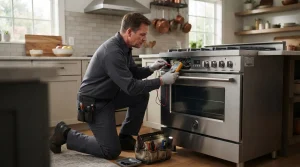
Gas, electric and induction Frigidaire ranges: burners that will not light, oven temperature that drifts, locked doors and F codes, diagnosed before…
Warm fresh-food section, no ice, frost, leaks or error codes on a Frigidaire refrigerator? We diagnose first and send a written estimate…
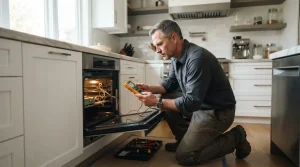
Single, double and oven-microwave Frigidaire wall ovens diagnosed in San Francisco homes, with a written estimate before any repair begins, every time.
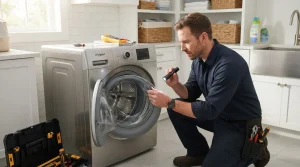
Frigidaire front-load or top-load washer not draining, shaking, leaking or showing an E code? We diagnose first and give a written estimate…
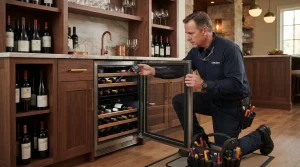
Diagnosis and repair for Frigidaire wine coolers that run warm, cycle nonstop, sweat, rattle or lose their display, with a written estimate…
Share a few details and we’ll confirm an appointment. Prefer to talk? Call us and we’ll help right away.