

Specialized Frigidaire Appliance Repair in San Francisco
Mon–Sat: 8:00 AM – 7:00 PM
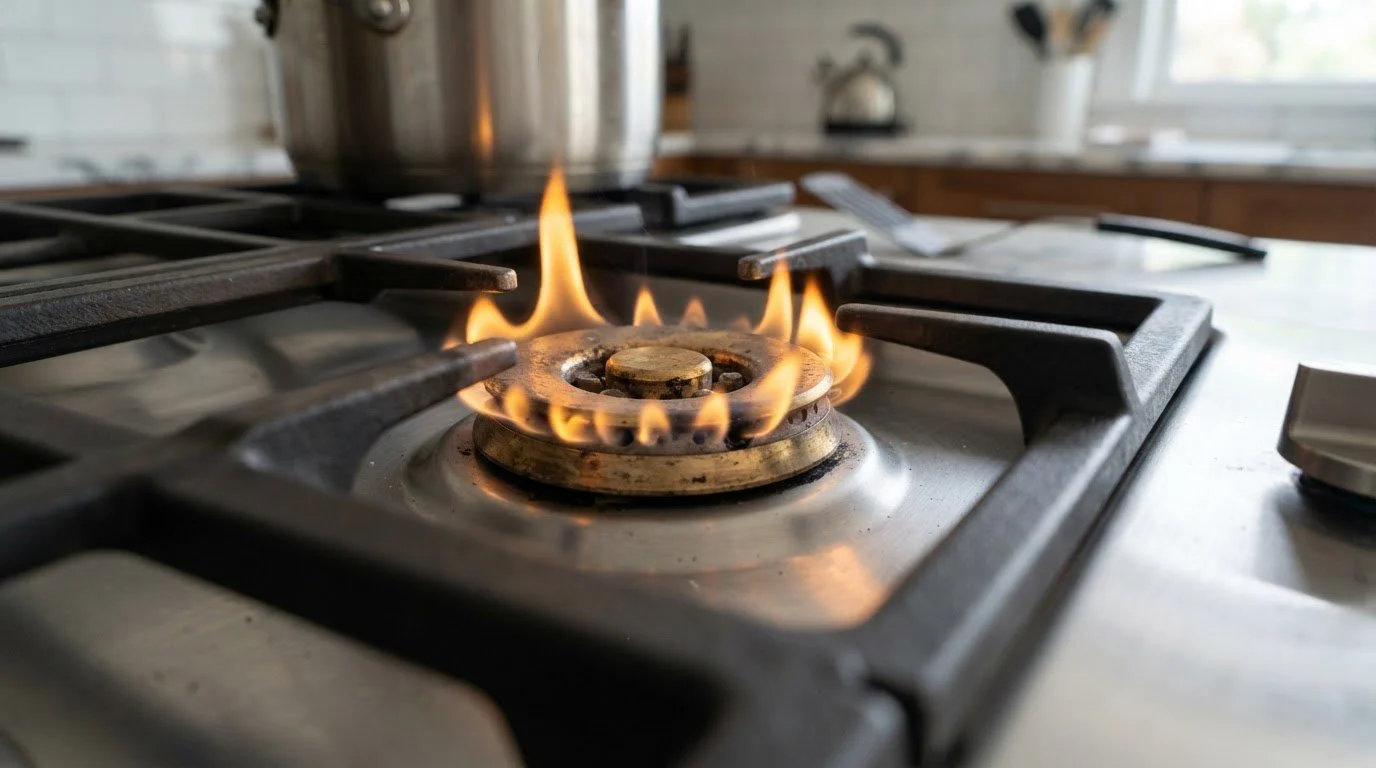
A healthy burner flame is steady and mostly blue. A yellow tip, a lazy ring or a flame that burns on one side deserves a closer look, and sometimes a gas smell means leaving first.
You turn the knob, the burner lights, and something looks wrong. The flame is tall and yellow at the tips, or it sits lazily on one side of the ring, or the cap hums and flickers. A gas burner is a small, carefully balanced device: gas leaves a tiny orifice, pulls in air through a mixing tube, and burns at the ports around the cap. When that balance shifts, the color and shape of the flame change first.
If you smell gas, do not light anything and do not touch switches. Leave the home, then call the gas utility or 911 from outside. If you notice a sooty smell, a black film on cookware that wasn’t there before, or a headache while cooking, turn the burner off, open a window, and stop using that burner until it has been checked. Never try to adjust, loosen or tighten gas fittings yourself, and never open the cooktop to reach the valves.
The most common cause is food. Boil-overs run into the burner head, dry into a crust, and cover the ports so gas cannot escape evenly. The cap then sits slightly tilted on a dirty base, which pushes the flame sideways. Next is a misplaced cap. After cleaning, a cap that is rotated or sitting on the wrong ring gives a flame that looks broken.
Another common cause is the air supply to the burner. Spiders and dust can narrow the mixing tube, and a worn orifice can pass too much gas for the air available. In kitchens that were converted between natural gas and propane, a burner running on the wrong orifice for its fuel will look dramatically wrong, with long yellow flames and soot. Rented units that were moved from another home are worth a look for exactly this.
You can also check the gas valve position at the wall if you have been told where it is, but do not take the range apart or loosen the connector. Keep the oven out of this: yellow flames in the oven burner call for the same caution and the same call.
A burner that clicks and never lights usually has a dirty or wet igniter, a misplaced cap, or a spark module issue. A burner that lights, then dies when you release the knob has lost its flame signal, so the valve closes. Both are separate from a yellow flame but often arrive with it after a messy spill. If you are seeing a display code, note it down; control faults on newer ranges appear as F-codes such as F1, which describes a control failure, and the code page explains what the control is reporting.
The same burner logic applies across the gas lineup, including the Gallery GCFG3060BD, the Professional PCFG3080AF and the FCRG3062AW. Check the label on the frame or inside the oven door for the exact model, as a technician needs it to choose the correct orifice and parts. Gas appliances in Bay Area flats and older row houses often share a shut-off valve near the floor, so find out where it is before you need it.
A technician looks at the burner heads, caps and ports, confirms the orifice and air mixture match the fuel supply, and tests the igniter and the flame sensing on each burner. A leak check on the connection is done with gas-rated methods, and if there is any concern, the burner is left off. You get a written estimate before repair, and nothing is changed without your approval. Read about the service on Frigidaire range repair and see the Frigidaire ranges guide.
Wipe spills when the cooktop is cool, dry caps before replacing them, and never run a burner with a missing cap. If your oven also bakes strangely after a flame problem, our article on oven temperature that runs wrong covers the oven side.
A little yellow at first light is common. Long, sooty yellow tips are not, because poor combustion produces carbon monoxide and soot. Turn the burner off and have it checked if cleaning the cap does not fix it.
Usually a blocked port or a cap that is not seated flat. Let the burner cool, lift the cap, wipe it, dry it and set it back so it sits level.
Please don’t. Scratching the head changes how the flame forms. A soft cloth and a dry cap are enough for the owner; deeper cleaning is for a technician.
A fuel change, such as natural gas to propane, needs the correct orifice. A mismatch gives long yellow flames. Tell us when it began so we can check the burner setup.
Leave the home without touching any switches and call the gas utility or 911 from outside. Do not return until it has been cleared.
Share a few details and we’ll confirm an appointment. Prefer to talk? Call us and we’ll help right away.