Wine Coolers
Freestanding, built-in and dual-zone Frigidaire wine coolers: where the label usually is, common faults, installation limits and safe first steps for owners.

Specialized Frigidaire Appliance Repair in San Francisco
Mon–Sat: 8:00 AM – 7:00 PM
When a cabinet drifts warm or starts to rattle, the bottles inside are what matter. We find the cause and quote in writing before any repair begins.
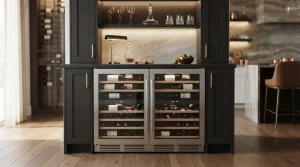
A wine cooler is a small refrigerator with a very particular job: hold a steady, gentle chill and keep vibration, light and swings to a minimum. In San Francisco that cooler might sit under a counter in a flat, in a pantry nook in a condo, in a garage conversion or in a dining-room built-in. When it begins to run warm, cycle constantly, rattle or leak, the bottles inside are the real concern. We diagnose and repair Frigidaire wine coolers across the city and the Bay Area, and we explain what we find before any part is ordered.
A display can show a set point while the cabinet drifts. We check whether the compartment sensor is reading honestly, whether the fan moves air through the cabinet, and whether the cooling system is removing heat or simply running. A cooler that hums all day yet never settles often has a cooling or airflow problem rather than a wrong setting.
Constant running is usually a symptom, not a verdict. A worn door gasket lets warm air in, a blocked condenser area keeps heat inside the cabinet, and a placement in a tight cutout traps exhaust. Each of these makes the system work harder, and we sort them out in order before looking at the sealed system.
Moisture on glass or inside the cabinet is common in the Bay Area where fog and damp air reach kitchens and garage rooms. It can be a gasket that does not seal, a door that closes slightly open, or a drain path that has clogged. Our post on Frigidaire wine cooler condensation and sweating covers how to tell harmless humidity from a real leak.
A rattle, buzz or sudden loud fan is worth attention, because vibration is the thing a wine cooler is supposed to avoid. Causes range from a leveling foot or loose shelf to a fan blade touching a frost buildup to a compressor mounting that has loosened. We find the source by listening in place and then testing individual parts.
An interior light that stays on, a display that goes blank, or buttons that do not respond may come from the door switch, the control board, or a wiring connection. These are small parts, but they sometimes mask larger issues such as a door that is not fully closing.
We begin with the label, the placement and the history. We ask when the problem began, whether the cooler was moved, whether the kitchen got warmer, and whether the door has been left open or loaded in a new way. Then we inspect the door seal, the airflow path, the fan, the sensor and the control behavior, and only after that do we judge the cooling system itself.
You receive a written estimate if a repair is recommended. Nothing is repaired without your approval, and if the unit is not a sensible repair we say so.
Built-in and under-counter wine coolers need breathing room. A model fitted into a tight cabinet cutout with no clear path for air may run hot and cycle without rest, even though nothing is broken. Freestanding units need space at the back and sides, and a cooler on an uneven floor can buzz because its feet are not carrying weight evenly. Heat sources matter as well: a cooler beside a range, a dishwasher exhaust or a sunny window will work harder than one in a cool corner.
Power supply matters too. A cooler sharing an overloaded circuit or a loose extension cord may shut off or restart unexpectedly. Rentals sometimes have outlets behind appliances that were never meant for continuous loads, and garage conversions can have cold winter nights that affect how the unit senses its own temperature. When we visit, we look at the whole installation, not only the machine.
Do not remove back or lower panels, test the wiring, or touch the sealed refrigeration lines. Those tasks belong to a technician.
Unplug the cooler if you smell burning, see sparks, find a scorched plug or cord, or notice water around the electrical connection. Switch off the breaker if there is a burning smell or sparking. A cooler that trips the breaker repeatedly should stay off until it has been examined, and bottles can be moved to a cool spot while you wait.
Wine coolers vary in how they are cooled, how the door seals and how the controls work. The label usually sits on an inside wall of the cabinet, near the bottom shelf or on the back of the unit, and the exact number tells us which parts apply. Please have it ready when you book. You can browse the full range of lines we support on the Frigidaire models page, and codes for other families are listed on the error codes page.
You tell us the model and the symptom, and we agree on a time window. The technician checks the cooler where it stands, since removing a built-in unit can create problems of its own, and explains what the evidence shows. A written estimate comes before any work. If you approve, we proceed; if not, you are free to decide at your own pace. For an overview of the whole lineup, read the Frigidaire wine cooler guide, or request a repair visit now.
It is worth acting before a warm cabinet becomes a lost collection. If the wine matters, move the bottles to a cooler spot while the unit is examined, and keep a note of anything unusual you noticed before it failed. Small observations, such as a click before the fan stops or a smell when the door opens, help us reach the cause faster.
Constant running is often caused by a worn gasket, a blocked vent or a tight cabinet cutout that traps heat. We check those first, then the fan, sensor and cooling system.
Some moisture is normal in damp coastal air. If water pools, drips outside the cabinet or comes with warm bottles, the gasket, door closing or drain path should be inspected.
If the cabinet is warm, moving the bottles to a cool, dark spot is safer. Keep them away from heat and light until the unit holds a steady chill again.
Common causes include uneven feet, loose shelves, bottles touching the cabinet and a fan or compressor mounting that has loosened. A technician finds the source by listening in place.
It is usually on an inside wall of the cabinet, near the bottom shelf or on the back panel. Have the number ready when you book so we can look up the right parts.
Freestanding, built-in and dual-zone Frigidaire wine coolers: where the label usually is, common faults, installation limits and safe first steps for owners.
Window, through-the-wall and portable Frigidaire room air conditioners diagnosed in San Francisco flats and homes, installation included, with a written estimate first.
Gas, electric and induction Frigidaire cooktops checked in San Francisco kitchens, from dead zones and touch controls to induction codes, with a…
Diagnosis and repair for Frigidaire dehumidifiers that run without collecting water, frost over, leak, show a code or fail to pump out…
Standing water, a dead panel, a door that will not latch or cloudy glasses: Frigidaire dishwasher faults are traced through water, drain,…
Frigidaire dryers that run but stay damp, will not heat, stop mid-cycle or show a code: diagnosis first, written estimate, nothing repaired…
Upright or chest Frigidaire freezer not freezing, building frost or cycling nonstop? We diagnose the cause first and give a written estimate…
No ice, hollow cubes, jams or leaks from a Frigidaire ice maker? We trace water, cold and controls, then give a written…
Stacked Frigidaire laundry centers in closets and small flats, with the washer and dryer halves tested separately and the shared parts checked…
Over-the-range, built-in and countertop Frigidaire microwaves examined in San Francisco, with the problem named before any repair is approved.
Gas, electric and induction Frigidaire ranges: burners that will not light, oven temperature that drifts, locked doors and F codes, diagnosed before…
Warm fresh-food section, no ice, frost, leaks or error codes on a Frigidaire refrigerator? We diagnose first and send a written estimate…
Single, double and oven-microwave Frigidaire wall ovens diagnosed in San Francisco homes, with a written estimate before any repair begins, every time.
Frigidaire front-load or top-load washer not draining, shaking, leaking or showing an E code? We diagnose first and give a written estimate…
Share a few details and we’ll confirm an appointment. Prefer to talk? Call us and we’ll help right away.