Ice Makers
Refrigerator ice makers and freestanding Frigidaire ice machines: no ice, small cubes, jams and leaks, with the water-line checks that come first.

Specialized Frigidaire Appliance Repair in San Francisco
Mon–Sat: 8:00 AM – 7:00 PM
Whether the maker sits in a refrigerator door or under a counter, we check the water supply, freezer cold and ice components in turn.
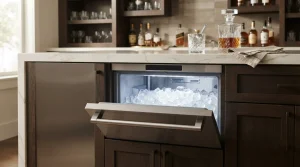
Ice is one of those household conveniences nobody thinks about until it disappears. A Frigidaire ice maker can sit inside a refrigerator freezer, feed a door dispenser, or stand alone under a counter in a basement bar or a rental unit with a built-in cabinet. In San Francisco homes, many of them in older buildings with older plumbing, the faults that show up most often involve water supply more than the machine itself. Our ice maker repair work covers refrigerator ice makers and freestanding ice makers.
An empty bin has three broad causes: no water reaching the unit, no cold reaching the ice mold, or the maker not cycling. A technician checks the supply line, the shutoff valve, the water inlet valve, the fill tube and filter, then the temperature in the freezer, and finally whether the ice maker module, its motor and its thermostat or sensor are doing their jobs. A bin arm left in the up position can stop production without any fault at all.
Weak water flow or a partly clogged filter lets the mold under-fill, which gives thin, hollow or oddly shaped ice. Cloudy cubes or a stale taste often point to an old filter, standing water or a freezer that holds odors. Neither is dangerous, but both are worth correcting.
Cubes that fuse into a block in the bin, a dispenser that hums without releasing anything, or a chute that clogs usually come from melt and refreeze cycles. Warm air getting into the freezer, frequent door openings or a temperature that wobbles can cause it. On refrigerators the display may show the DI SP code, which means an ice jam in the dispenser chute with an audible tone.
A frozen fill tube, a bad inlet valve or a cracked mold housing can overfill the tray and send water into the freezer or the floor. Our post on an ice maker that overfills or leaks water goes through the checks in order.
We start with the water, because that is the cheapest thing to confirm and the most frequent cause. The technician traces the supply from the valve to the unit, looks for kinks and slow flow, and checks the filter. Then comes the cold side: freezer temperature, airflow and frost near the mold. Only after that do we look at the module, motor, sensor and the dispenser switch. We measure instead of guessing.
Once the fault is isolated, you receive a written estimate describing the work. Nothing is repaired until you approve it. If the real issue is a freezer that is too warm, we say so, because replacing an ice maker will not help.
Water supply is the big variable. Rentals and older flats may use a small saddle valve on a copper or plastic line that has been pinched behind the refrigerator for years. Pushing a unit back into a counter-depth opening can kink the line. Hard water scales the inlet valve and the fill tube, and filters that are overdue slow the flow. For freestanding ice makers, the drain matters just as much: the melt water must run to a drain or a pump, and a blocked line floods the cabinet. Built-in units need clearance for air to cool the condenser, and a cabinet that is too tight makes ice thin and the machine loud.
If the ice maker is part of a refrigerator, the cold air that makes ice comes from the refrigerator’s freezer system, which is why our Frigidaire refrigerator repair service often overlaps. A stand-alone ice maker or a freezer fault belongs with Frigidaire freezer repair when the cabinet is not cold enough.
For refrigerators, the dispenser jam code above is the only ice-specific one in our verified list. Other messages such as H or HI relate to temperature, which can stop ice from forming. For freestanding units we do not list any codes, so we ask you to write down any light pattern you see rather than rely on a guess.
Do not run the unit with a leaking supply line, open the back panel, or chip at ice with a knife near the water line.
Turn off the water supply valve if you see water on the floor or inside the freezer. Switch off the breaker if water is near the outlet. If ice tastes strange or has an odor after a long shutdown, discard it and run a few cycles after the filter is changed. Ice that has been contaminated by spoiled food should never be used.
Ice maker modules, valves and sensors are specific to the platform. In a refrigerator the label is usually inside the fresh-food compartment on a side wall or along the door frame; on a freestanding unit it is usually on the inside wall or the back panel. Your model number tells us whether the maker is a part of the refrigerator or a stand-alone unit. For reference, see how the FRSS2323AS side-by-side is described here.
Send a request with the model number and a description of the problem. We confirm details, arrange a time and ask you to clear space so the technician can reach the unit and its water line. The technician checks water, cold and the ice-making components in that order, explains the finding, and gives you the written estimate. After approval the repair is completed and the machine is tested through a full cycle where time allows.
See the Frigidaire ice makers guide for the lineup, or request a visit when you are ready.
That usually means the main supply is fine and the problem is closer to the ice maker: a frozen fill tube, a faulty module or sensor, or a freezer that is not cold enough. A technician checks those in order.
The mold is not filling completely, most often because of a clogged filter, a pinched supply line or a weak inlet valve. Replacing an overdue filter is a sensible first step.
Discard old ice and run a few batches first. Ice absorbs odors and can pick up contamination, so start with fresh batches after a shutdown.
Water near an outlet or a cord is a risk. Close the supply valve and switch the breaker off if water is spreading, then arrange a diagnosis.
Yes, along with the ice makers inside Frigidaire refrigerators. You see a written estimate first and nothing is repaired without your approval.
Refrigerator ice makers and freestanding Frigidaire ice machines: no ice, small cubes, jams and leaks, with the water-line checks that come first.
Window, through-the-wall and portable Frigidaire room air conditioners diagnosed in San Francisco flats and homes, installation included, with a written estimate first.
Gas, electric and induction Frigidaire cooktops checked in San Francisco kitchens, from dead zones and touch controls to induction codes, with a…
Diagnosis and repair for Frigidaire dehumidifiers that run without collecting water, frost over, leak, show a code or fail to pump out…
Standing water, a dead panel, a door that will not latch or cloudy glasses: Frigidaire dishwasher faults are traced through water, drain,…
Frigidaire dryers that run but stay damp, will not heat, stop mid-cycle or show a code: diagnosis first, written estimate, nothing repaired…
Upright or chest Frigidaire freezer not freezing, building frost or cycling nonstop? We diagnose the cause first and give a written estimate…
Stacked Frigidaire laundry centers in closets and small flats, with the washer and dryer halves tested separately and the shared parts checked…
Over-the-range, built-in and countertop Frigidaire microwaves examined in San Francisco, with the problem named before any repair is approved.
Gas, electric and induction Frigidaire ranges: burners that will not light, oven temperature that drifts, locked doors and F codes, diagnosed before…
Warm fresh-food section, no ice, frost, leaks or error codes on a Frigidaire refrigerator? We diagnose first and send a written estimate…
Single, double and oven-microwave Frigidaire wall ovens diagnosed in San Francisco homes, with a written estimate before any repair begins, every time.
Frigidaire front-load or top-load washer not draining, shaking, leaking or showing an E code? We diagnose first and give a written estimate…
Diagnosis and repair for Frigidaire wine coolers that run warm, cycle nonstop, sweat, rattle or lose their display, with a written estimate…
Share a few details and we’ll confirm an appointment. Prefer to talk? Call us and we’ll help right away.