

Specialized Frigidaire Appliance Repair in San Francisco
Mon–Sat: 8:00 AM – 7:00 PM
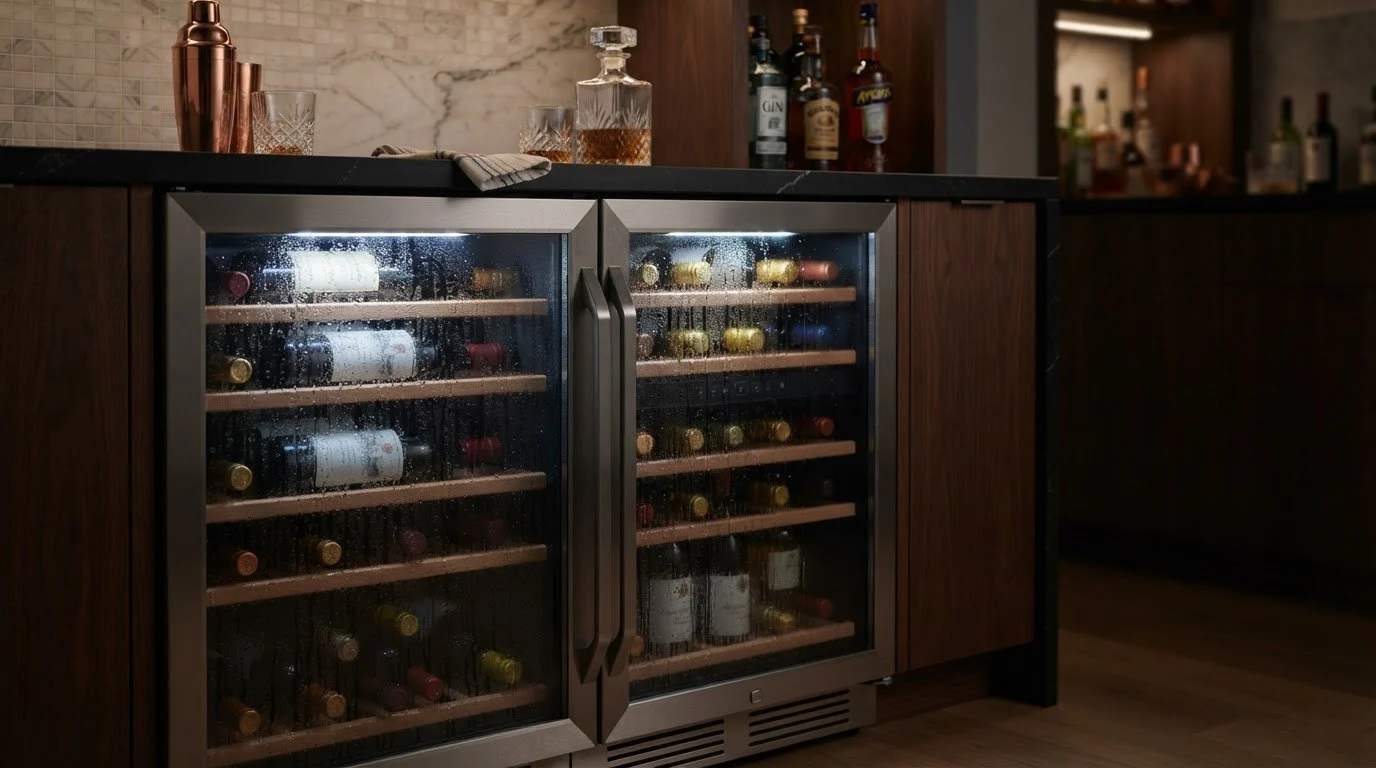
Moisture on the glass door, inside the cabinet or on the bottles is common, but constant dripping points to a seal, airflow or installation problem worth fixing.
You open the cooler and find beads of water on the glass, a damp shelf or labels peeling off bottles. Or the door glass fogs every evening. Wine coolers sit in an awkward position: the inside is cold, the room is warm, and the door is the border between the two. Some moisture is normal. Water that runs, pools or drips onto the floor is a sign that something about the seal, airflow, door use or installation is off.
Warm, humid air carries water vapor. When that air touches a cold surface, such as the glass door or the interior wall, the vapor turns into liquid. The more humid the room, and the more often warm air gets inside, the more moisture appears. A wine cooler also has an evaporator, and as it runs the evaporator collects moisture that must drain away. If it cannot drain or if too much warm air enters, the cabinet becomes damp.
Do not remove back panels, tamper with sealed refrigeration lines, or add salt, rice or desiccant bags to the cabinet. Moisture running toward the plug or a wet outlet means switching off the breaker before you touch anything.
Sweating only on the outside of the glass in the evening usually means a humid room and a cold set point. Sweating inside near the rear wall points to the drain or airflow. Water on the floor beneath the unit suggests a clogged drain or a gasket leak that sends melted frost out the front. A damp, musty smell with mold on corks suggests a leak path as well as humidity, and should be cleared up soon, since labels and corks suffer.
Under-counter models need clearance and a ventilation path, and a unit pushed tight into a cabinet run can overheat. Free-standing coolers need space on all sides. In compact San Francisco kitchens and bars, it is common for a cooler to sit beside a dishwasher or oven, which adds heat and moisture. If a built-in unit has been moved, check that it is level and that the cabinet opening has not blocked the vent.
Wipe the interior and the gasket with a soft damp cloth and let everything dry with the door open for a short time while the unit is off. Keep bottles from touching the glass or the back wall, since contact points sweat first. Avoid overfilling the shelves, because crowded bottles block air from circulating. If a bottle label peels often, it is worth moving that bottle to a drier shelf while you chase the cause. A cooler that has been off for a while should be left to settle before you judge the moisture level, because the first hours after startup are damper than later ones.
A refrigerator with the same symptom has similar causes, such as a worn gasket or a door that does not close; see our guide to condensation around refrigerator doors for the shared ideas. Wine coolers differ in that they hold a milder temperature, so they have a narrower margin between the inside and the room.
If moisture persists after the checks, a technician examines the gasket, the door alignment, the drain, the fan and the controls, and watches the unit hold temperature. Parts depend on the model number, which is usually on a label inside the cabinet or behind the front grille. See Frigidaire wine cooler repair and the Frigidaire wine coolers guide. You receive a written estimate before any repair, and nothing is repaired without your approval.
Yes. Cold glass in a humid room will fog. Constant dripping, pooling or damp labels is not normal.
Evening kitchen activity often raises humidity. A cooler set colder than needed makes the glass cold enough to sweat.
Very often. A dirty, twisted or hardened gasket lets humid room air in. Clean it and check that the door closes flat.
If it is free-standing and its vents are blocked, yes. Built-in units need their front vent clear instead.
Persistent moisture can lift labels and mold corks. Fix the cause rather than only wiping the cabinet.
Share a few details and we’ll confirm an appointment. Prefer to talk? Call us and we’ll help right away.