

Specialized Frigidaire Appliance Repair in San Francisco
Mon–Sat: 8:00 AM – 7:00 PM
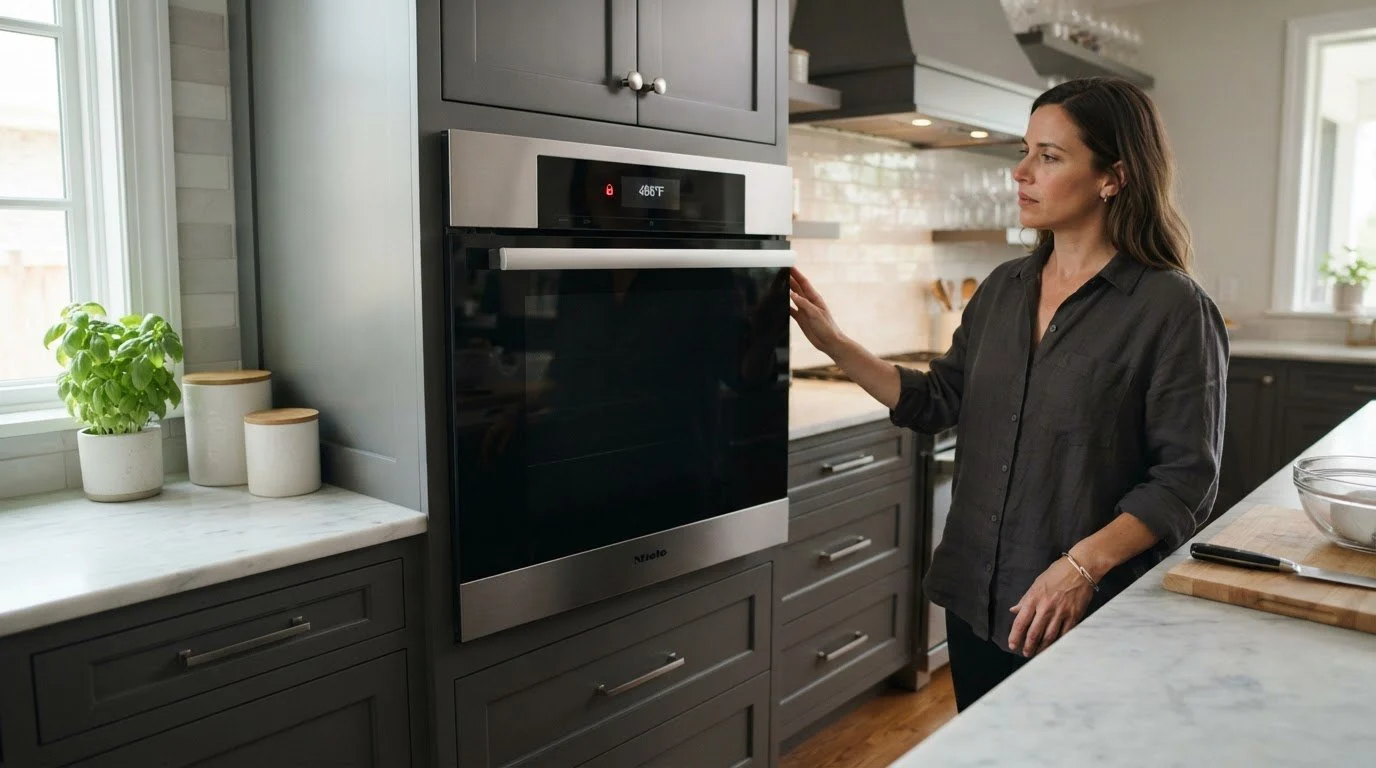
The self-clean cycle ended but the oven door stays locked. Here is what the lock is doing, what you can safely check, and when a technician should look.
You ran the cleaning cycle overnight, the display says the cycle is finished, and the handle will not move. Or the door unlocked for a moment and then locked again. Either way you cannot get at the racks, and dinner is waiting. The good news is that a locked door right after a cleaning cycle is frequently normal behavior. The not-so-good news is that a door that stays locked long after the oven has cooled points to a lock motor, a lock switch or a control that has lost track of where the latch is.
During a self-clean the oven cavity runs far hotter than it does for baking, so the control engages a motorized latch at the top of the door frame. The latch is a small hook driven by a motor, with a set of switches that tell the control whether it is open, closed or somewhere in between. The control will not release that hook until two things are true: the cavity has cooled to a safe level, and the switches report a clean sequence. If either is missing, the door stays shut on purpose.
That is why the first thing to check is time. A heavily soiled oven holds heat for a long while after the cycle ends, and the lock indicator may stay lit well after the heating elements or burner have stopped. Opening the oven too early is something the lock exists to prevent.
Do not pry the door, hang weight on the handle, or tap the frame with a tool. The hook sits behind a metal cover, and forcing it can bend the latch or crack the door glass, which turns a lock problem into a bigger repair. Never remove the control panel or the top trim to reach the latch yourself.
Frigidaire ranges report latch trouble with a short family of codes. F90 means the maximum oven door unlock time was exceeded, and F91 means the maximum number of unlock attempts was exceeded. F92 points to the door being open too long, F93 to the lock time being exceeded, and F94 to too many lock attempts. All five are listed as door lock issues. A separate code, F8 or F9, refers to lock motor switches that are out of sequence or shorted, which is the situation the control describes when it cannot tell where the hook is. Seeing one of these tells the technician where to start, so always note it down.
On the visit we begin by reading the stored code and watching the lock cycle, because the sound and movement of the hook say a lot. We confirm the oven has actually cooled, check how the door fits against the frame, and test the lock motor and its switches for correct travel. If the switches read properly and the motor does not move, the fault leans toward the motor or the control relay. If the motor moves but the switches disagree with it, the lock assembly is the likely part. You get a written estimate before anything is repaired, and nothing is replaced without your approval.
Gas ranges, electric ranges and induction ranges all use a similar latch, but the surroundings differ. In a gas model such as the Gallery GCFG3060BD, the cleaning cycle runs the burner and the cavity holds heat longer, so patience matters even more. On an electric model such as the GCFE3060BF, the same lock motor logic applies with element heat.
If you smell gas, leave the home and call the gas utility or 911 from outside, and do not touch any switches. If you smell burning, see sparks, or the oven will not stop heating, switch the range off at the breaker. If the door has been locked for many hours with the oven cold and the code keeps returning after a single power reset, book a visit through our Frigidaire range repair service. For the whole lineup, see the Frigidaire ranges guide.
Wipe up heavy spills before starting a cleaning cycle, and remove racks and loose pans so nothing warps against the door. Do not interrupt a cycle unless you must, and avoid starting one before a long absence. If baking results also drift after cleaning, read our note on ovens that bake unevenly, since a sensor disturbed by heat and soot can cause both.
It stays locked until the cavity has cooled enough for the control to release the hook. A heavily soiled oven can take a long time, so wait until the glass is cool and the lock light is off before worrying.
Please do not. The hook sits behind a metal cover and pulling on the handle can bend the latch or crack the glass. Try one Cancel and one breaker reset, then book a visit if it stays locked.
That usually means the control is retrying because the lock switches reported an odd sequence. It can also follow a brief power interruption. Note any F code and tell us when you book.
The lock itself is a safety feature, but a stuck latch is mainly an inconvenience. The danger is forcing it, or ignoring burning smells, sparks or a gas odor, which call for the breaker or an exit and a call to the gas utility.
Often not. Many controls refuse to heat when the latch position is unreadable, so a lock fault can also stop baking until it is repaired.
Share a few details and we’ll confirm an appointment. Prefer to talk? Call us and we’ll help right away.