

Specialized Frigidaire Appliance Repair in San Francisco
Mon–Sat: 8:00 AM – 7:00 PM
Before you reset a tripped breaker again, take a few minutes to record what happened. The details you note can save a technician a lot of searching.
The kitchen goes quiet, a light flickers, and the panel in the hall has one switch in the middle position. You reset it, the appliance starts, and a minute later it trips again. A tripping breaker is protection against too much current or a leak to ground, and it is rarely a nuisance. It can mean an appliance has a failing part, a circuit is overloaded, or something about the wiring or outlet is wrong. Technicians deal with these calls all the time, and the single most useful thing you can give them is a clear record of what happened.
If you smell burning, see scorch marks, hear buzzing from the panel or an outlet, or find a hot plug, switch the appliance off at the breaker and leave it off. If you smell gas, leave the home and call the gas utility or 911 from outside without touching switches. Do not keep resetting a breaker that trips right away. Repeated resets can stress the wiring and the breaker. Never open panels or test live circuits.
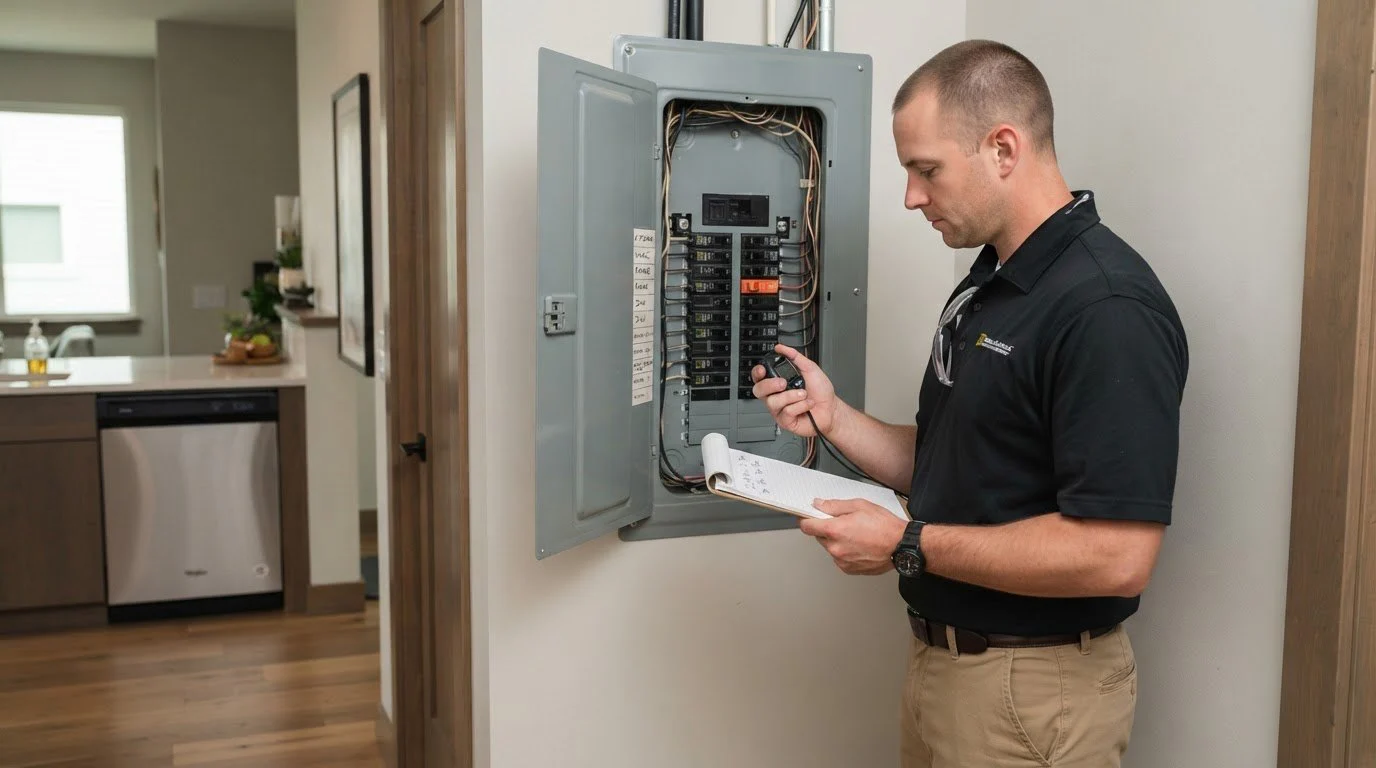
Take photos of the data label, the display and the breaker panel with the breaker in its tripped position. A short video of the appliance running, if it runs at all, also helps.
Do not pull the appliance out and open the back, do not bypass the breaker, and do not replace it with a larger one. Leave wiring and breaker work to a licensed electrician.
If a breaker trips with the appliance unplugged, or other devices trip it too, the problem sits in the circuit, outlet or panel, and an electrician is the right call. If the breaker trips only when one appliance runs, the appliance is the suspect. Heating parts such as ranges and dryers are common sources, with an element or igniter circuit shorting to ground. A compressor, a drain pump or a motor with failing windings can also draw too much current. A technician can tell the cause apart by testing the unit, which is why your notes about timing and sound matter so much.
A refrigerator that trips only when the compressor starts points to a start component or compressor. A washer that trips when the heater or pump engages points to those parts. A dishwasher that trips during the heated dry stage is a different story from one that trips at the first fill. An electric range that trips when the oven heats points to an element; see our Frigidaire range repair information. A dryer that trips as soon as it heats should be treated the same way, and our Frigidaire dryer repair page covers what a visit looks at. For a refrigerator, see the Frigidaire refrigerator repair service.
When you request a visit, share your notes: the appliance type, the model number from its label, the breaker behavior, any code, and the pattern you saw. Tell us if it is a rental, a condo with a shared panel, or an older home, as access to the panel can matter. The model number is usually on the door frame, inside the door or on a side panel. Our contact page is the place to send the request.
The visit begins with a diagnosis. You receive a written estimate before any repair, and nothing is repaired without your approval. If we find the fault is in the circuit rather than the appliance, we tell you plainly so you can call an electrician. The more specific your record, the faster we narrow it down, and the less time the appliance stays out of use.
No. A single reset to see what happens is reasonable. Repeated resets of a breaker that trips right away can stress the wiring.
Unplug the appliance and reset the breaker. If it still trips, the circuit is the issue. If it holds, plug the appliance in alone and watch.
A GFCI trips on a leak to ground. Moisture, a failing heater or a damaged cord can cause it. Note when it trips and avoid using the appliance until it is checked.
Never. A breaker is sized for the wire behind it. A larger one can allow the wire to overheat. Ask a licensed electrician about the circuit.
The appliance model number, the timing of the trip, any code or smell, and what else was on the circuit. Photos of the label and panel also help.
Share a few details and we’ll confirm an appointment. Prefer to talk? Call us and we’ll help right away.