

Specialized Frigidaire Appliance Repair in San Francisco
Mon–Sat: 8:00 AM – 7:00 PM
When the built-in pump runs but the hose stays dry, or the bucket keeps filling, the cause is usually the hose, the lift or the float. Here is how to sort it out.
A pump lets a dehumidifier send water up and away through a hose, so you do not have to carry the bucket to a sink. It is a convenience that suddenly turns into a chore when the pump stops moving water. You may hear the motor, see the bucket fill, or notice a code on the display. The pump is a small device with a few things that can go wrong, and most of them are easy to spot without opening anything.
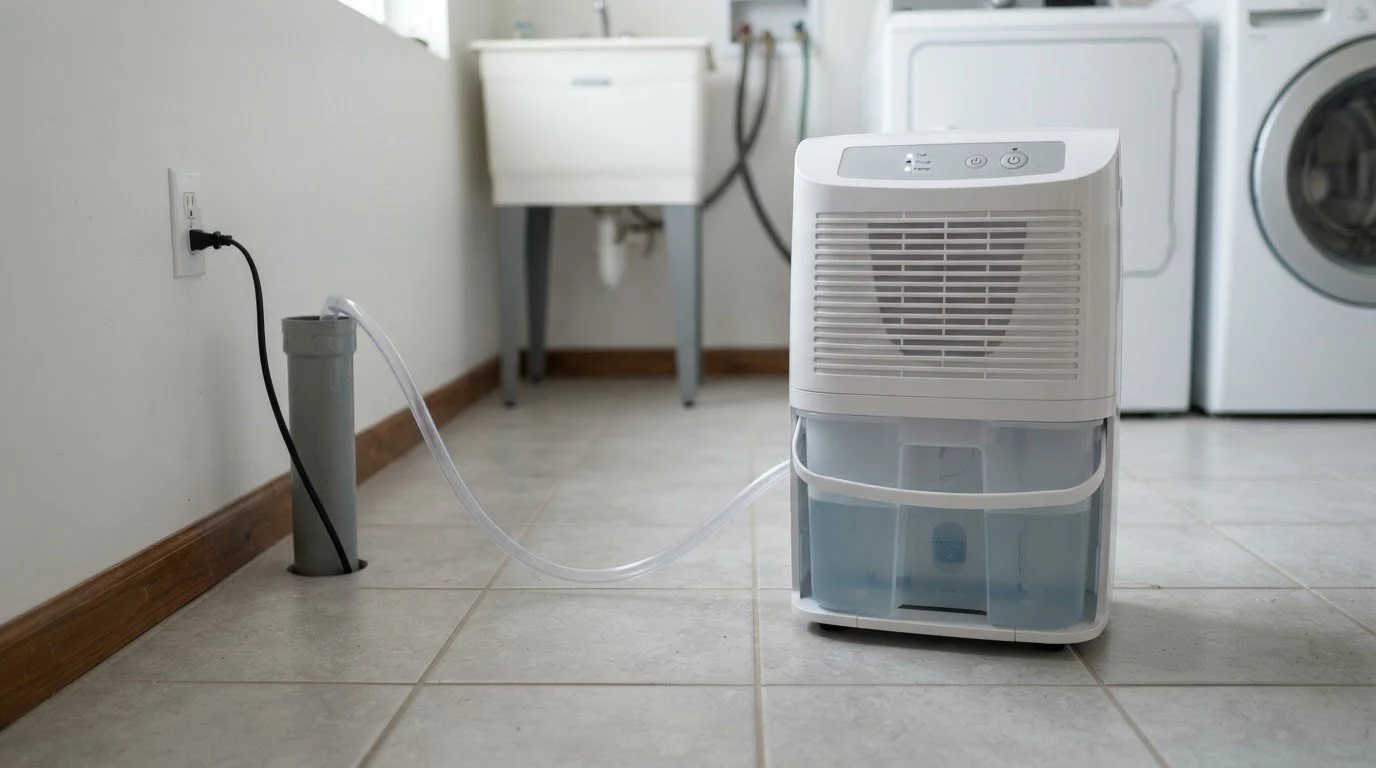
Water drips from the coil into the bucket. A float inside tells the control when there is enough water to pump. The pump then pushes the water up the drain hose to a sink, tub, floor drain or outdoor spot. If the pump cannot clear the water within the allotted time, the control shows a pump-out failure and may stop the unit. The PU code describes exactly this: a failure to pump out the bucket within the allotted time.
Do not open the cabinet or the pump housing, and do not run the pump dry for long. Do not use a hose that is cracked or leaking at the connector. If you smell burning or see water around the plug, switch off the circuit at the breaker before touching it.
In many Bay Area homes the dehumidifier sits in a garage, a ground-floor room or a basement, and the drain is a utility sink or a floor drain several steps away. A pump can lift water only so far, and the farther and higher the hose, the weaker the flow. Placing the unit closer to the drain, or running the hose in a gentle rising line instead of a sharp climb, makes a big difference. In shared buildings, check that the drain you use is permitted by the property manager.
If a unit pumps fine but the bucket stays empty and the coil is iced, the issue is the cooling side, not the pump. See our note on a dehumidifier that freezes up. If the display shows a sensor or sealed-system code instead of PU, the pump may not be the cause at all.
Rinse the filter and the hose before each damp season, and look at the hose end after any storm or heavy use. Keep the bucket and float area free of slime by wiping them with a soft cloth when you empty the bucket by hand. If the unit sits on a bare concrete floor, set it on a level board so it does not rock, because a tilted bucket confuses the float. When the unit is moved, check that the hose has not been stepped on and that the connector at the port is still seated.
Pump features vary by model. Check the label, which is usually on the side or back panel, and compare it with models such as the FFAD2234W1, FHDD2234W1 or FHDD2233Y1. Whether a given unit has a pump, and how the hose connects, depends on the exact model, so we do not guess without the number. The Frigidaire dehumidifiers guide lists the family.
Book if the hose is clear and the lift is reasonable but the pump still fails, if the unit hums without moving water, if PU returns after a reset, or if water leaks from the unit. Our Frigidaire dehumidifier repair visit diagnoses the pump, float, hose and control, and gives a written estimate before any work. Nothing is repaired without your approval. On older units we are candid when a repair is not worth it.
It describes a failure to pump out the bucket within the allotted time. Check the hose, the lift and the bucket seating first.
The hose may be blocked or kinked, or the lift may be too high. If the hose is clear, the pump itself may be weak.
It depends on the model, so check the manual for your number. In general, a shorter, gently rising hose works better than a long steep one.
Avoid it. Running the pump dry for long can damage it. Let the bucket collect some water before testing.
Yes, from time to time. Slime and mineral buildup in damp spaces can restrict flow. Rinse it with clean water and reconnect it firmly.
Share a few details and we’ll confirm an appointment. Prefer to talk? Call us and we’ll help right away.