

Specialized Frigidaire Appliance Repair in San Francisco
Mon–Sat: 8:00 AM – 7:00 PM
A washer that stalls with wet clothes can be redistributing a load, waiting for water or reacting to a fault. Learn how to tell a pause from a real stop.
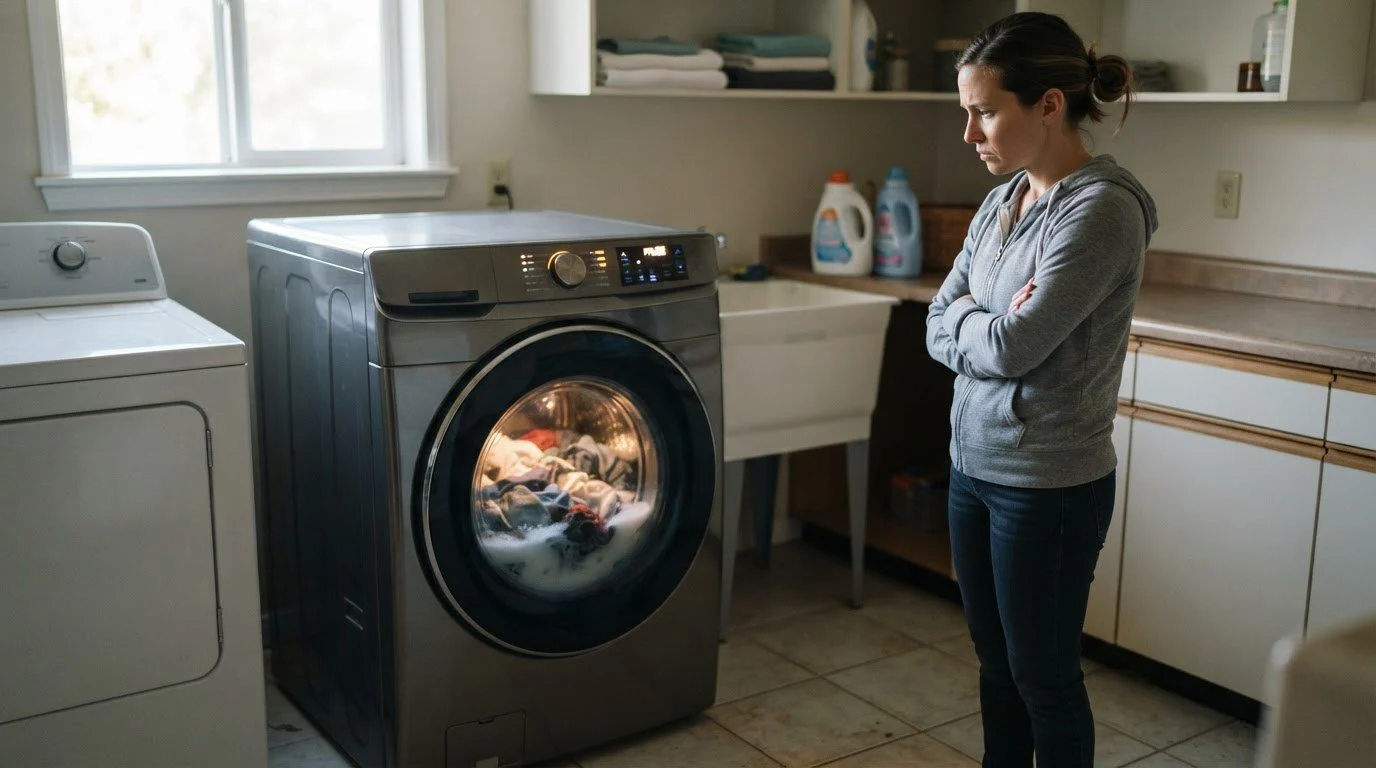
The cycle looked normal, then it went quiet. The drum is still, the clothes are soaked, and the display counts nothing or shows a steady letter and number. Modern washers pause for good reasons: to soak, to let a fill catch up, to measure the load, or to break up suds. What bothers owners is a stop that does not resume. In a Frigidaire washer, the cause is usually a sensor waiting for something, such as water, a closed lock, a balanced drum or a power signal.
Many cycles include a soak, a delay before a rinse and a slow re-balance before a spin. The washer may sit silent while it senses the load weight or while detergent dissolves. A heavily soiled or bulky load stretches these steps, so a pause that lasts a while is not always a fault. Wait through it, and check whether the display shows progress or an alert. A washer that has truly stopped will often beep, flash a code, or keep a door lock engaged with no change.
If the tub never fills, the washer holds at the fill step. Closed or partly open supply taps, a kinked hose, a clogged inlet screen or low pressure in an old building slow the fill. It describes code E1 as water not entering the washer or a slow fill, and code E11 as a fill time that is too long. Check both taps before anything else; a tap that was bumped during cleaning is a very common reason.
A washer that cannot drain stops before the spin and sits. This links to code E2, which means water takes too long to drain or is not draining. Our post on a washer that won’t drain goes through that path in detail.
The washer will not tumble if the door lock does not confirm. A latch that does not close, a lid that is lifted, or a worn lock mechanism interrupts the cycle. Code E3 means the lid is open or the lid lock failed, and code CL appears when the lid stays open with control lock on. If a control lock is enabled, buttons will do nothing, which looks like a stall. Check that you have not left control lock on.
Too much soap fills the drum with foam, and the washer will pause, rinse again or stop. Code EF2 is too much soap. Balance matters as well: code E4 is an unbalanced unit during spin, and the washer may attempt several redistributions before stopping altogether.
A washer sharing a circuit with a heater, a dryer or a microwave in a small flat can see voltage dips. Examples include code EA3 as power supply voltage too low and code EA2 as too high. If the stop coincides with another appliance starting, try a separate outlet or ask an electrician to check the circuit. A cycle that stops with no code, and the same stage each time, can point to a control board or a sensor, which a technician must test.
The stage at which the cycle froze is the strongest clue you have. A stop during the first fill points to the supply side. A stop after washing, with water still in the drum, points to the drain or the lock. A stop that comes when the drum has just begun to speed up points to balance or to the motor control. A stop in the rinse, with foam visible through the glass or lid, suggests soap. Tell the technician which stage it was, whether the drum held water, whether the lock was engaged and what the display showed. Those four facts often separate a ten-second fix at the tap from a part that must be ordered, and they save a lot of guessing during the visit.
Do not pry the door open against the lock, since the drum can contain a lot of water, and do not unplug mid-cycle repeatedly, which can confuse the board. Avoid adding more detergent to clear suds; running a plain rinse is better. If you smell burning or see sparks, turn off the breaker and leave it off.
If the stop repeats at the same step after the checks, the fault is in the fill, drain, lock or control. Our Frigidaire washer repair visit begins with a diagnosis based on the code and stage, followed by a written estimate; no repair starts without your approval. Learn more in the Frigidaire washers overview, and see the entry for FWFX22D4EW. A cycle that stops because of vibration is covered in shaking or walking during spin.
It depends on the cycle, load and soil level. A soak or balance step can look like a stop, so watch for any sign of progress before deciding it has failed.
Common reasons are water that has not drained, an unbalanced load or a lock that has not confirmed. The code, if shown, narrows it.
Yes. Closed taps, kinked hoses and low pressure keep the tub from filling, and the washer waits or stops.
Note the stage where it stops and what the drum holds. That information helps the technician find a sensor or control issue.
A power reset returns the cycle to the start and may clear temporary settings, but it does not harm the machine when done once.
Share a few details and we’ll confirm an appointment. Prefer to talk? Call us and we’ll help right away.