

Specialized Frigidaire Appliance Repair in San Francisco
Mon–Sat: 8:00 AM – 7:00 PM
Lettuce turns to glass, milk grows ice crystals and eggs crack. Here is what makes a Frigidaire fresh-food compartment run too cold, and how to sort it out.
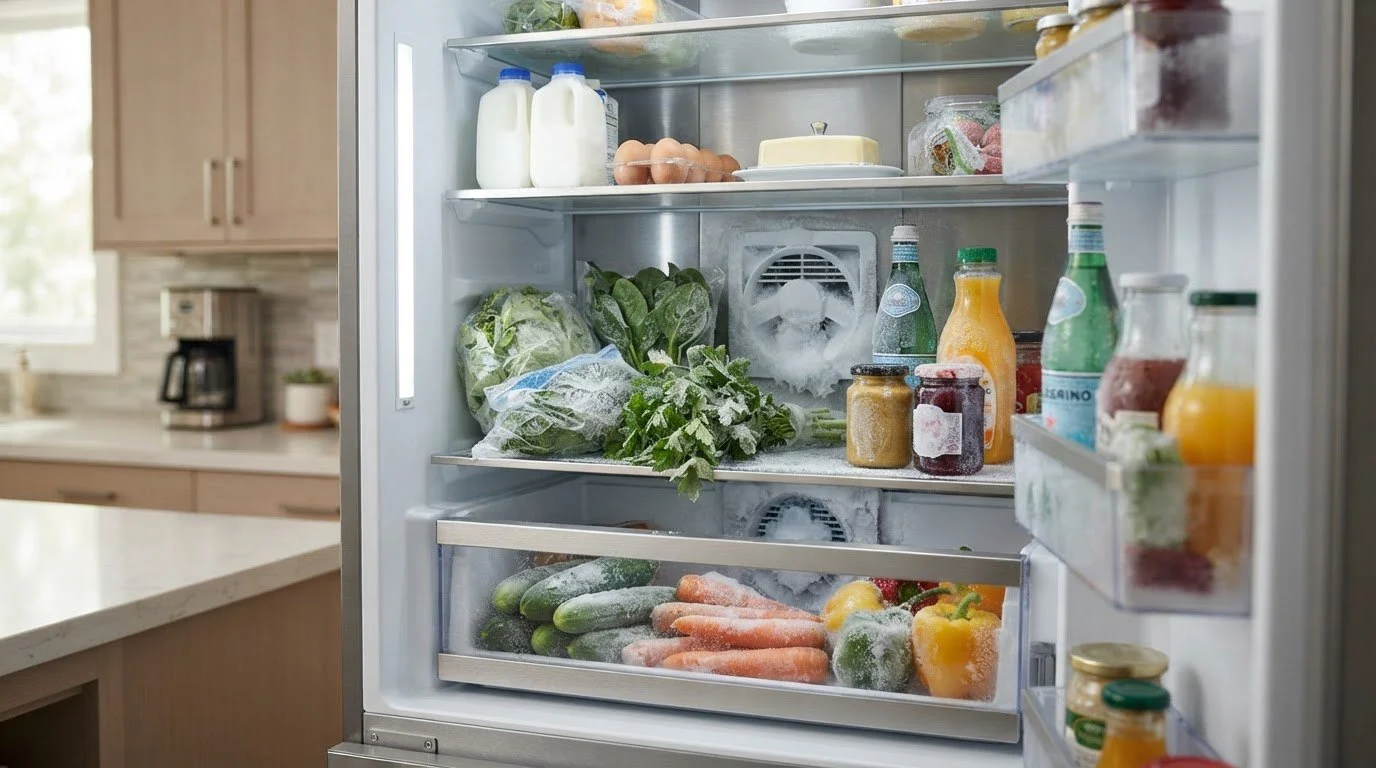
You open the crisper and find spinach that has gone translucent and limp. The milk jug has a slushy layer at the bottom, a carton of eggs has hairline cracks, and the yogurt is stiff. Nothing is warm, nothing smells wrong, yet the food in the main compartment is freezing. In a Frigidaire refrigerator that is a metering problem: the freezer makes the cold, and a small amount of it is steered into the fresh-food side. When too much arrives, or it arrives in a stream aimed at your groceries, the contents pay for it.
Most modern refrigerators, including the Frigidaire lines we see around San Francisco, cool both compartments from one evaporator in the freezer. A fan pushes air across that coil. A portion of the air is directed through a duct and a motorized or mechanical damper into the fresh-food section, where it comes out of small vents, usually near the top or along the back wall. A temperature sensor in the fresh-food side tells the control board when to open that damper and when to let it close. Everything that follows comes down to that chain: the vent, the damper, the sensor, the fan and the board.
The easiest explanation is also the most common. A container of leftovers or a head of lettuce pressed against the back wall sits directly in the air stream. The rest of the compartment may read a perfectly normal temperature while that one item freezes. If the damage is always to the same shelf, or always to things touching the back, start here.
Touch controls on a front panel get brushed by sleeves, cleaning cloths and curious kids. A setting dropped several steps colder will freeze delicate food within a day or two. Look at what the display shows now, compare it with what you remember, and move it back toward the middle of the range rather than to an extreme.
The airflow door can collect frost, a film of spilled drink or ordinary dust, and it can stay open when the board is asking it to close. The fresh-food side then keeps receiving freezer air for hours, and the sensor never gets the chance to say enough. A technician checks the damper movement and the heater that keeps it free of ice.
The thermistor in the fresh-food compartment is a small temperature probe. If it drifts, or fails open or shorted, the board is working from false information and keeps cooling while the compartment is already cold. Some Frigidaire controls announce this on the display. This section of the site explains code OP as an open fresh-food or freezer thermistor and code SH as a shorted one, shown in the fresh-food or freezer position of the display.
If the evaporator fan runs at the wrong time, or the main board does not command the damper properly, airflow stops following the thermostat. A failed evaporator fan more often warms the compartment, and it has its own entry, code SY EF, but an erratic fan or board can swing either direction.
A freezer crammed with groceries from a big shop makes the unit run longer, and long runs send more air toward the fresh-food side. Likewise, a unit parked next to an oven or a sunny window in a San Francisco flat works harder than it should.
That is where owner checks end. The vent cover, the damper and the sensor sit behind interior panels, so leave them closed.
Do not push the setting to the coldest position to fix an unrelated warm drink, and do not tape over the vent. Blocking it can starve the freezer and ice the coil. Do not chip at frost with a knife or screwdriver, because the evaporator lines are thin and sealed. And do not keep storing eggs, produce and beverages in the freezing zone hoping it settles; throw out anything that thawed and refroze, and keep the rest on the upper shelves away from the back.
If food is still freezing after a day with clear vents and a sensible setting, or if a display code appears, the fault is inside the cabinet. Our Frigidaire refrigerator repair visit starts with a diagnosis: we measure both compartments, watch the damper and fan through a cycle, and read the sensor, then give you a written estimate. Nothing is repaired until you approve it. The same fault can show up differently on each build, so having the model number ready helps; it is usually on a label inside the cabinet wall or near the door frame. Browse the Frigidaire refrigerators overview if you are not sure which type you have, or look at pages such as FFHT1814YB and FFPS3133UM to see how we describe individual models.
If the opposite is happening and the compartment is warm, read our note on a high-temperature alarm under code H. A related sign of poor airflow is moisture collecting where it should not, covered in water under the crisper drawers.
Produce stored against the back wall or beneath a vent sits in the coldest stream of air. Moving it forward and onto a different shelf often stops the damage, but if it keeps happening, the damper or sensor deserves a look.
Quality drops, and some items turn mushy or split. If something thawed completely and was left warm, throw it out. When in doubt about dairy, meat or leftovers, discard rather than risk illness.
A dirty condenser usually makes the whole refrigerator run warmer, not colder. Dust can still lengthen run times, which pushes more air to the fresh-food side, so keeping the grille clear is worth doing.
One controlled power reset is fine: unplug, wait, plug back in, and leave the settings alone for a day. Repeating it does not fix a failed sensor or a stuck damper.
Yes. It tells the technician which airflow layout and control your refrigerator has, so we can bring the right parts to the diagnosis.
Share a few details and we’ll confirm an appointment. Prefer to talk? Call us and we’ll help right away.