

Specialized Frigidaire Appliance Repair in San Francisco
Mon–Sat: 8:00 AM – 7:00 PM
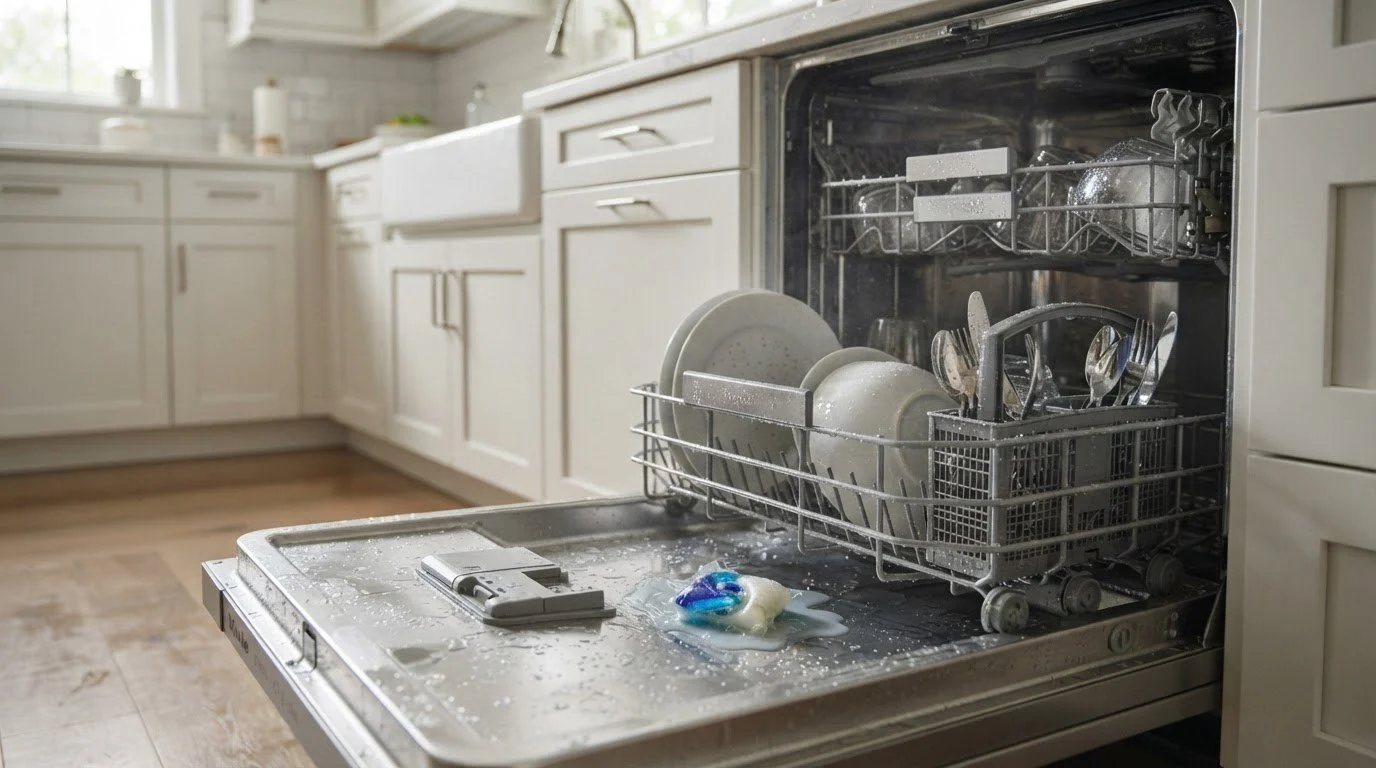
Finding a half-melted pod or gritty gel on the door after a cycle? A Frigidaire dishwasher that leaves detergent behind usually has a dispenser, water or spray problem.
It is an annoying discovery: the cycle ended, the dishes look dull, and a soft blob of film or a barely touched pod sits in the dispenser or on the tub floor. The detergent was loaded, but it never did its job. In a Frigidaire dishwasher the reasons fall into four groups: the dispenser did not open, the water was too cool or too little, the spray could not reach the pod, or the pod was wet before the cycle began.
The detergent cup sits on the inner door and is released by a small latch or wax-motor mechanism at the right point in the cycle. If the cup lid is stuck by dried detergent, or if a tall dish or the handle of a pan blocks the lid from swinging open, the pod stays put. Run a fingertip along the hinge and the latch edge; a crust of old detergent there is common. Check also that the lid snaps closed fully when you load it, since a lid that sits ajar leaks water onto the pod and starts it dissolving before the main wash.
If the lid opens by hand but never opens by itself during a cycle, the release part or its wiring may have failed. That is a technician job.
Pods need warm water to melt their film. The dishwasher heats water itself, but only after it fills. If the incoming water was cold and the heating step ran short, or the heater is weak, the film stays gummy. The dishwasher may also be telling you about the heat step: the Frigidaire dishwasher Th indicator flashes on a detected thermistor failure, which can leave the machine unsure how hot the water is. Little water in the tub produces the same result, because the pump has less to circulate and the pod gets only a few splashes.
A practical habit helps here: run the kitchen tap until it is warm before starting a cycle, especially when the sink is far from the water heater, as in many older San Francisco flats and rentals.
Even a good cycle fails when the spray arms cannot turn or their jets are blocked. Mineral deposits from hard water clog the small holes, and a utensil dropped through the rack can jam an arm in place. Spin each arm by hand. They should turn freely and drop back without catching. Check the jets by looking through them against the light.
The pod’s position matters too. A pod placed at the wrong spot, or one that falls into the bottom of the tub, is washed over by water only briefly. A tall pot leaning against the dispenser can deflect the spray away from the cup.
A dirty filter reduces water flow and leaves less force at the spray arms. The code Frigidaire dishwasher i40 identifies a clogged filter or sump. Remove the filter from the tub floor and rinse it. A dishwasher that has been used for years without the filter being cleaned loses wash strength slowly, so many owners do not connect the symptoms. If the dishwasher also leaves a white film on glass, see Frigidaire dishwasher leaves cloudy glasses or white film.
Pods absorb moisture. A box left open near the sink, a pod handled with wet fingers or one stored under a leaking trap will stick to the cup and dissolve slowly. Old pods also lose speed. Try a fresh box and keep it in a dry cabinet. Some households do better with powder or gel in a dispenser that never opens fully, which is a clue that the dispenser, not the product, is the issue.
A dishwasher in a long run from the water heater, a condo with a shared hot-water loop that takes a while to warm, or a unit with a partly closed supply valve may all give a weak start to the cycle. A drain hose that sags into the standing water also leaves dirty water in the tub, and the cycle then begins in a weaker bath.
Do not pour harsh drain chemicals into the tub to clear residue, and do not mix cleaning products. Do not drop a pod directly onto the tub floor as a shortcut, since it can melt in one spot and leave a film. And do not open the inner door panel to repair the dispenser mechanism; it holds the wiring that controls the latch.
Book when the pod survives after you have cleaned the dispenser, filter and arms, when the lid never opens by itself, or when the water in the tub stays cool through the cycle. We diagnose before repairing, provide a written estimate, and do nothing without your approval. The model label is usually along the inner edge of the door. Our Frigidaire dishwasher repair page explains the visit, and Frigidaire dishwashers lists the lineup. A Gallery model such as the Frigidaire GDPH4515AF follows the same principles.
Often the dispenser lid never opened, or it opened too late. Dried detergent on the hinge and a rack item that blocks the lid are common reasons.
Yes. The film around a pod needs warm water. Running the tap warm before you start helps in kitchens far from the water heater.
It can. If the machine misreads the water heat, it may end the heating step early. A flashing Th indicator is a clue.
You can try it to learn whether the product or the dispenser is the issue. If powder also stays in the cup, the dispenser needs a look.
It often does, because a clogged filter reduces circulation and wash strength.
Share a few details and we’ll confirm an appointment. Prefer to talk? Call us and we’ll help right away.