

Specialized Frigidaire Appliance Repair in San Francisco
Mon–Sat: 8:00 AM – 7:00 PM
Beads of water along the door frame, a damp gasket or drips on the floor are usually humidity at work. This post explains when it is normal and when something needs repair.
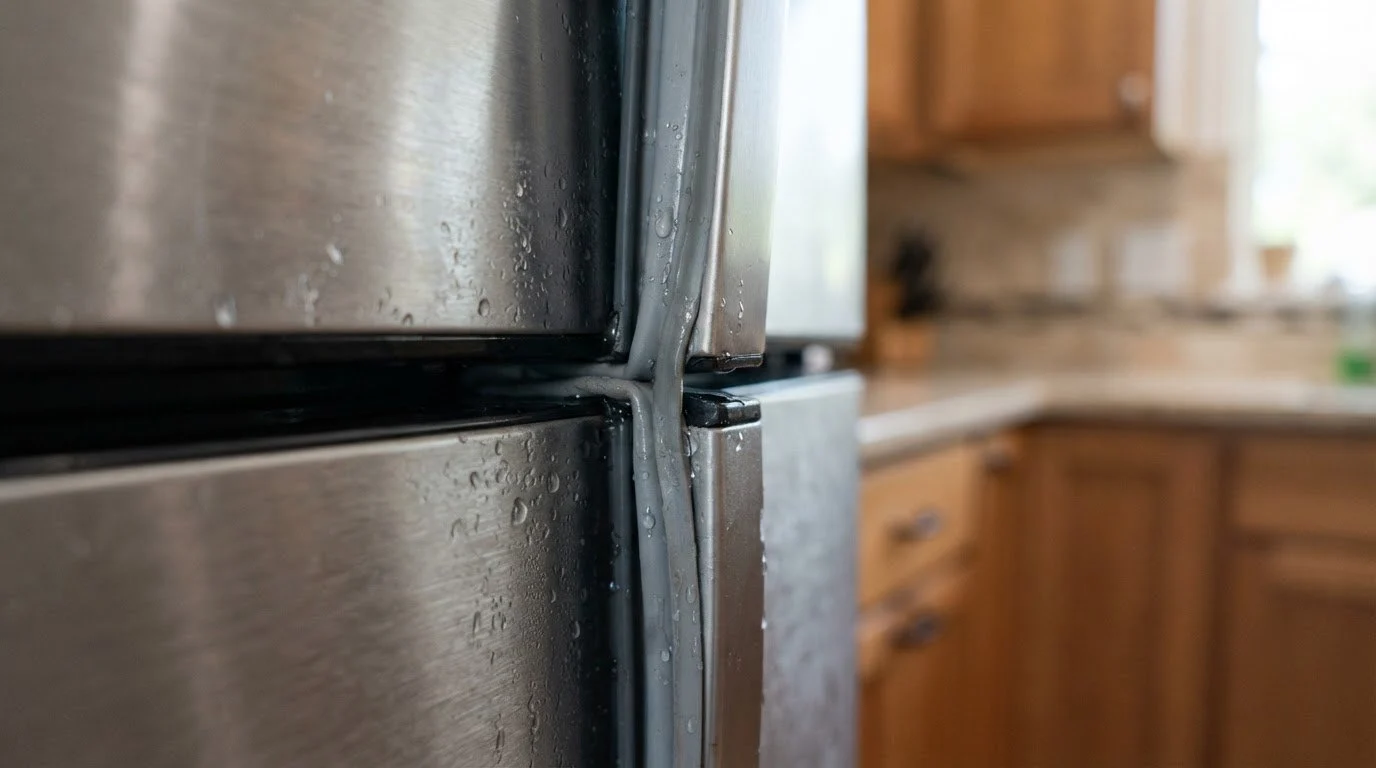
You notice a wet line along the door frame, a damp patch under the handle, or tiny drops that gather and slide down the front panel. Inside, there may be a cloudy film on the glass shelf nearest the door. Moisture appears because warm, damp air meets a cold surface. The question is why the surface is colder than the room air allows, or why the air gets to it. In a Frigidaire refrigerator the answer is almost always one of four things: the gasket, the door position, the room, or a heater that no longer does its job.
Some moisture is expected. On a humid evening in the Bay Area, when fog sits against the building and the kitchen is warm from cooking, a cold cabinet will show a trace of dew near the hinges. That clears when the room dries. What is not normal is moisture that runs down to the floor, stays for days after the weather changes, or forms inside the door seal where nobody has touched it. A pattern that gets worse over weeks signals a fault, not the weather.
The gasket is a flexible bellows with a magnet strip. Over time it stiffens, tears or gets caked with spilled syrup and dust. A gap lets humid room air stream in each time the compressor cycles and the pressure inside drops. The air condenses on the shelves, and frost begins to grow near the leak. Close a strip of paper in the door at several points and tug it gently; if it slides out with no resistance in some places, the seal is weak there. A door that does not shut fully, which we discuss in door won’t close or pops open, produces the same result.
A refrigerator that leans forward or sideways lets a door swing open slightly. The cabinet front also flexes when it is heavily loaded. In older San Francisco flats, with kitchens set on a sloping floor, adjusting the front feet makes a real difference. A refrigerator that was moved for cleaning and pushed back against a wall with the doors stuck behind a cabinet end also fails to seal in the same way.
Many refrigerators hold a low-power heater loop in the door frame or the center divider. It keeps the cabinet edge just above the temperature at which dew forms. When the loop fails, a cold strip appears and sweats heavily, usually along the part where the two doors meet or around the freezer opening. You cannot test it safely at home. If sweating is concentrated along one narrow band and the gasket looks good, a technician checks the heater and the control that drives it.
Hot food, long door openings, an open window beside the kitchen and a unit parked near a stove all raise the moisture load. A refrigerator in a closed pantry without airflow struggles too. A very full refrigerator blocks internal air, so the door-side shelves stay cooler than the center and attract more dew.
Look closely at where the drops form. Beads along the vertical edge where the two doors meet usually point to the center divider and its heater. Moisture lower on the door, close to the floor, often comes from a gasket that has folded under at the bottom corner. A wet patch on top of the cabinet is typically room humidity meeting a cold lid, which is rarely a repair issue. Water inside along the shelf edge nearest the door suggests warm air entering through the seal, while a trickle at the freezer opening may indicate a small gap or a door that drags on a bin. Writing these details down, with a photo if you can, makes the diagnosis quicker and lets the technician arrive with the correct parts for your type of refrigerator.
Do not coat the gasket with oil or grease, which attracts dirt and can weaken the rubber. Do not tape over the seal or wedge a towel in the door. Do not scrape frost near the gasket with a blade. Heat of any kind also warps the plastic liner, so let the surface dry on its own.
If the gasket is clean and intact, the cabinet is level, and sweating persists or is accompanied by frost, a heater or control fault is possible. The visit starts with a diagnosis, then a written estimate; we do not repair anything until you approve. Details about the service are on Frigidaire refrigerator repair, and the Frigidaire refrigerators page helps you find where the model label usually is. For examples of model entries, see FFCS0562AW and PRSC2222AF. Standing water below the cabinet is covered in water under the crisper drawers. An alarm after a long outage, such as code PF, can also leave the cabinet damp.
In humid weather a little dew is normal. Heavy beading that runs down the front or persists after the weather dries points to a seal, alignment or heater problem.
Gaskets are a common repair, but fitting one flat and square takes care, and the wrong fit worsens the leak. If you replace one, buy the part by model number.
One door may sag from a worn hinge or be pushed off by an item in the bin. Check its closing path before blaming the gasket.
Persistent moisture can damage the floor under it, grow mold on the gasket and encourage frost, so it deserves attention.
No. Open doors warm the contents and add humidity. Wipe the area dry, then close it.
Share a few details and we’ll confirm an appointment. Prefer to talk? Call us and we’ll help right away.