

Specialized Frigidaire Appliance Repair in San Francisco
Mon–Sat: 8:00 AM – 7:00 PM
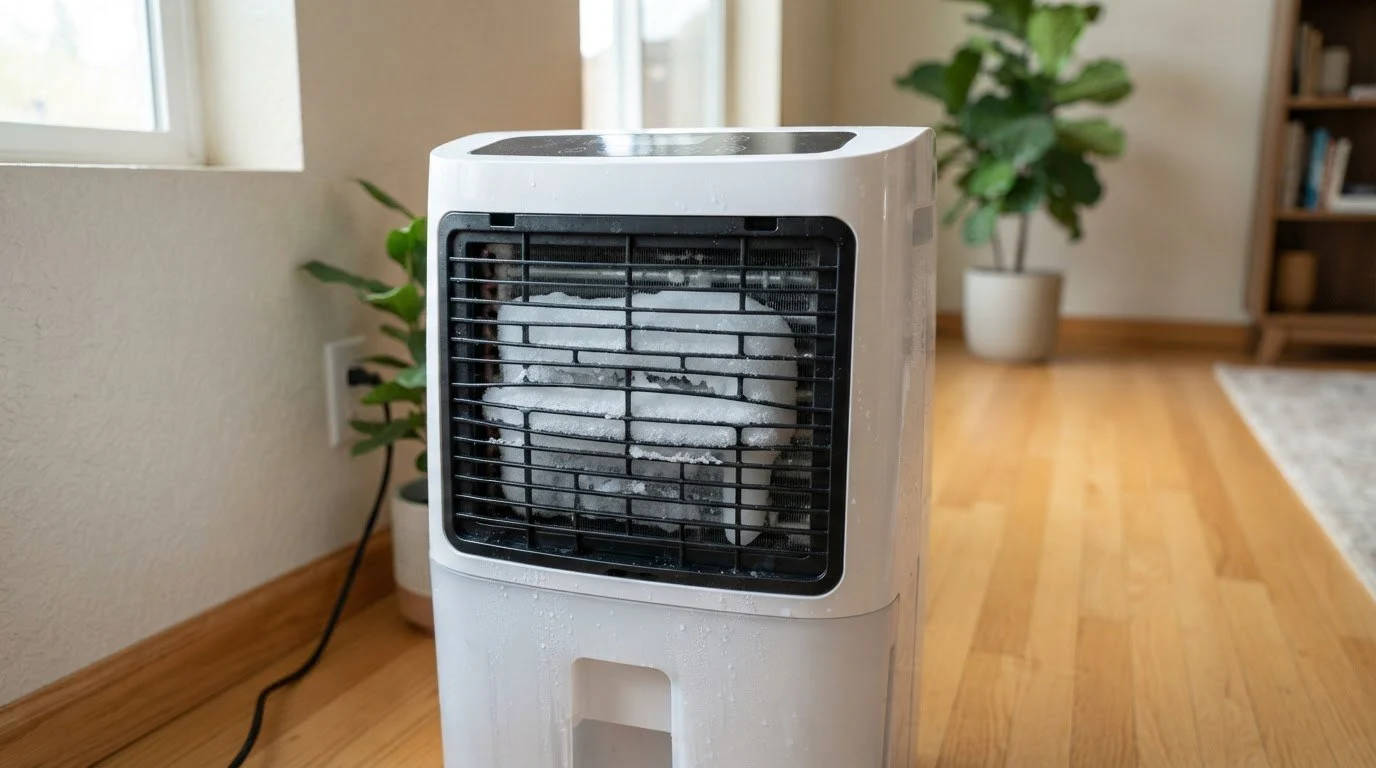
Frost on the coils means the dehumidifier is no longer pulling water from the air. Cool rooms, poor airflow and sensor trouble are the usual explanations.
You find the bucket empty, the fan running and a layer of white frost on the coils behind the grille. Or the machine runs for hours and the room feels no drier. A dehumidifier works like a small refrigerator: a cold coil chills the air passing over it, moisture condenses and drips into the bucket, and the dried air is warmed by a second coil and pushed back into the room. When the cold coil gets too cold, the water on it turns into ice instead of dripping. A layer of ice insulates the coil, so it collects even less, and the problem feeds itself.
Frost needs a coil that is colder than freezing, which in practice means the air passing over it is too cool or too slow. In a garage, an unheated basement or a storage room during a Bay Area winter, the incoming air may simply be cold enough that frost forms. Many dehumidifiers pause the compressor and run the fan to melt it. If frost keeps building, or the machine stays iced in a normal room, something else is wrong.
Do not open the cabinet, bend the fins, or add anything to the coil. If you smell burning, see sparks or find a hot cord, unplug the unit and switch off the circuit at the breaker. Keep it away from standing water while it thaws.
Some units show a code when the control detects a problem. AS and ES describe a temperature or humidity sensor failure, and F1 and F2 carry the same meaning. These matter in a frost problem, since the control relies on the sensors to judge when to defrost. EC and F0 describe a sealed-system failure, and E5 and H3 describe compressor overload protection. Write the exact code down before you reset anything.
A dehumidifier that runs, shows frost, and then recovers after a thaw was probably in a cold or restricted spot. A unit that frosts every time, even in a mild room and with a clean filter, is a candidate for a sensor, fan or sealed-system issue. A unit that never produces water at all, with no frost, needs a different checklist. If water is collected but the unit cannot empty itself through the pump, see our note on a dehumidifier pump that won’t drain.
The dehumidifiers covered include the FHDD2233Y1 (22 pint, current), the FFAD2233W1 (22 pint, discontinued) and the FHDD3534Y1. The label is usually on the side panel or the back, and the number tells a technician the sensor layout and parts. Browse the Frigidaire dehumidifiers guide for the lineup.
Give the machine open space on every side, set it on a level floor, and keep doors to the room closed so it only treats the air you want dry. A unit placed beside a damp wall or inside a closet starves itself of air, and a small room with a closed door can also run the compressor too long. If you only need to dry laundry or a single corner, move the unit close to that area rather than turning it down to a harsh setting.
We confirm the unit runs in a suitable room, clear the filter and coils, check the fan, test the sensors, and watch a full run and defrost sequence. Only if all of those pass do we point toward the sealed system. A discontinued or older unit may not justify a sealed-system repair, and we tell you so before any work. You get a written estimate and nothing is repaired without your approval. Details are on the Frigidaire dehumidifier repair page.
In cool Bay Area homes, especially ground-floor flats and garages, run the unit during the warm part of the day and leave open space around it. Keep the filter clean before each damp season. If you rent, report persistent moisture to the property manager, since the real fix may be ventilation or a leak.
In a cool room, yes. Many dehumidifiers pause the compressor to melt it. Frost that returns after a clean filter in a mild room is a sign of a deeper issue.
No. Chipping or heating the coil can damage it. Unplug the unit and let it thaw naturally with towels underneath.
Frost insulates the coil and blocks the water from forming. It can also mean a failed sensor or sealed-system problem. Thaw it and test again.
Often, yes. Cool air makes the coil colder. A warmer room or a shorter run during the warmest hours helps.
Not necessarily. Sensor codes are often a small repair. Sealed-system codes are the ones where an older unit may not be worth fixing.
Share a few details and we’ll confirm an appointment. Prefer to talk? Call us and we’ll help right away.