

Specialized Frigidaire Appliance Repair in San Francisco
Mon–Sat: 8:00 AM – 7:00 PM
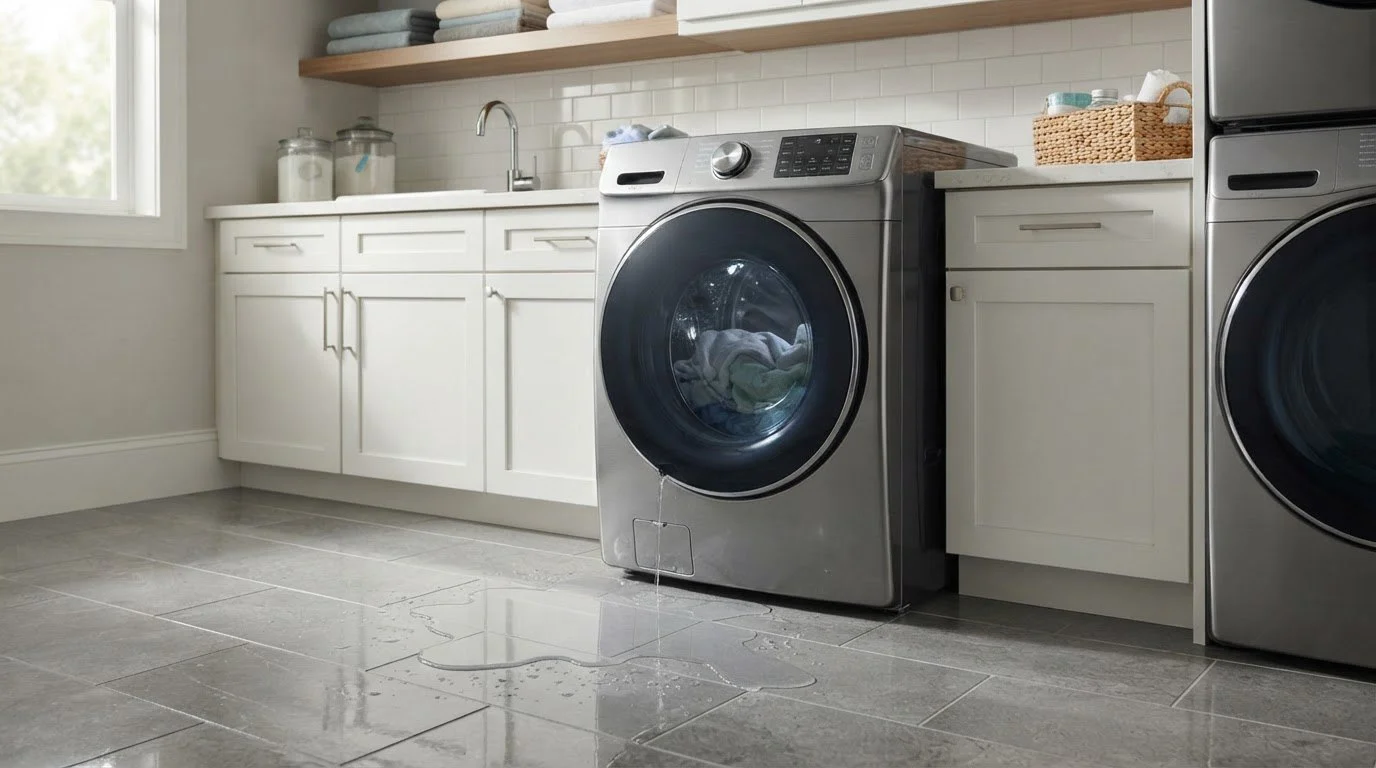
Where the water appears on a leaking Frigidaire washer says a lot about the cause. Use the location to separate a clean-up job from a part that needs replacing.
A washer leak is rarely subtle. You find a damp mat, a wet baseboard or a dark patch in the closet, and the water seems to come from everywhere. Most of the time it does not. A Frigidaire washer sheds water at a few predictable places, and watching the early stage of a cycle, with a dry towel under the front, lets you separate them. Take photos of where the water starts, the stage of the cycle, and whether the tub was full or draining.
On a front-load washer, the rubber boot between the drum and the door holds the water in. Trapped hair, a lost sock or a coin can sit in the fold at the bottom and lift the seal, so water runs out along the glass. Mold growth on the boot suggests a seal that has not dried between loads. A small tear shows as a thin line of drops at one point in the cycle. Check whether the water appears from the bottom of the door only, or all around it. If it comes only at the bottom, debris is the more likely cause; all around suggests a worn or misaligned door.
Also check whether the door is closing correctly. Examples include code do as a door problem indicator, and a door that is not latching fully will often leak.
Water dripping from the soap drawer usually comes from the dispenser overflowing. Powder that clumps, a clogged siphon cap or too much liquid soap can push suds out of the drawer. Code F2 points to too much soap or the wrong type, where suds may overflow, and code EF2 is also too much soap. Remove the drawer if it comes out freely, rinse away residue and check the opening behind it. If water pours rather than seeps, an inlet or dispenser hose behind the panel may have loosened.
Water at the bottom of the cabinet has the most causes. It could come from a hose at the back, from the drain hose, from the pump housing, from the tub seal or from a cracked tub. Run the washer through a drain-only step while watching: a leak at the start of the drain points to the pump or the drain hose, a leak during fill points to an inlet connection, and a leak that begins when the tub spins up suggests a seal or bearing. A steady drip at rest, even when the washer is off, often means the supply tap is dripping onto the cabinet or an inlet valve is not closing. Code E13 is described as a water leak in the tub or an air leak in the air bell, and a leak error should be taken at face value.
The two supply hoses at the back run from the taps to the washer inlets. A worn washer inside the hose coupling, or a hose that is hand-tight, will drip. In a rental or a flat with a shared wall box, the tap itself may leak at the stem. Dry each connection with a paper towel and see which one gets wet. Shutting off the tap fixes the leak at its source and tells you the supply side is the culprit.
When the water appears matters as much as where. Water that shows up the moment the tub fills, before the drum has turned, usually involves the door seal, the dispenser or a supply connection. Water that only appears during the wash tumble comes from the boot or door when the load shifts. Water during the drain points to the pump housing or the drain hose, and water during spin often means a tub seal or a loosened clamp. If the floor is damp but you saw nothing leak during a cycle, consider the taps or the wall box behind the washer, which can drip all day. Dry everything, then check again in a few hours.
Do not operate a washer that leaks near the control panel or the power cord. Switch it off, close the taps and leave it unplugged if the cord is dry and reachable. Do not seal a tear in the door boot with caulk, because it will not hold under water pressure. Do not tighten hose couplings with a wrench beyond a snug fit, as you can crush the rubber washer. Water in a stacked closet can reach the unit above, so shut the supply and dry the area right away.
If the leak is not at a visible hose or the boot, or if it returns after you have cleaned and dried everything, the pump, tub seal or an internal hose is likely involved. Our Frigidaire washer repair visit starts with locating the leak under a controlled cycle, then you receive a written estimate and nothing proceeds without your approval. See the Frigidaire washers overview for the label location, and compare FWFX22D4EW with other entries. If water is also left in the drum, read why a washer won’t drain.
Spin flings water against the tub and boot. A leak that appears then often points to a worn seal, a door boot problem or a drain hose that has loosened.
Yes. Excess suds find the dispenser and the vents and run out of the drawer. Using the amount marked for high-efficiency washers prevents it.
Heavy mold shows the seal is staying wet and can mask small tears. Wipe the boot and leave the door ajar between loads.
Dry the floor and stop if water reaches the cabinet bottom or electrical parts. A small leak can ruin flooring and affect neighbors below.
Close the taps. If the leak stops, the supply side is involved. If it continues, the water is inside the washer.
Share a few details and we’ll confirm an appointment. Prefer to talk? Call us and we’ll help right away.