

Specialized Frigidaire Appliance Repair in San Francisco
Mon–Sat: 8:00 AM – 7:00 PM
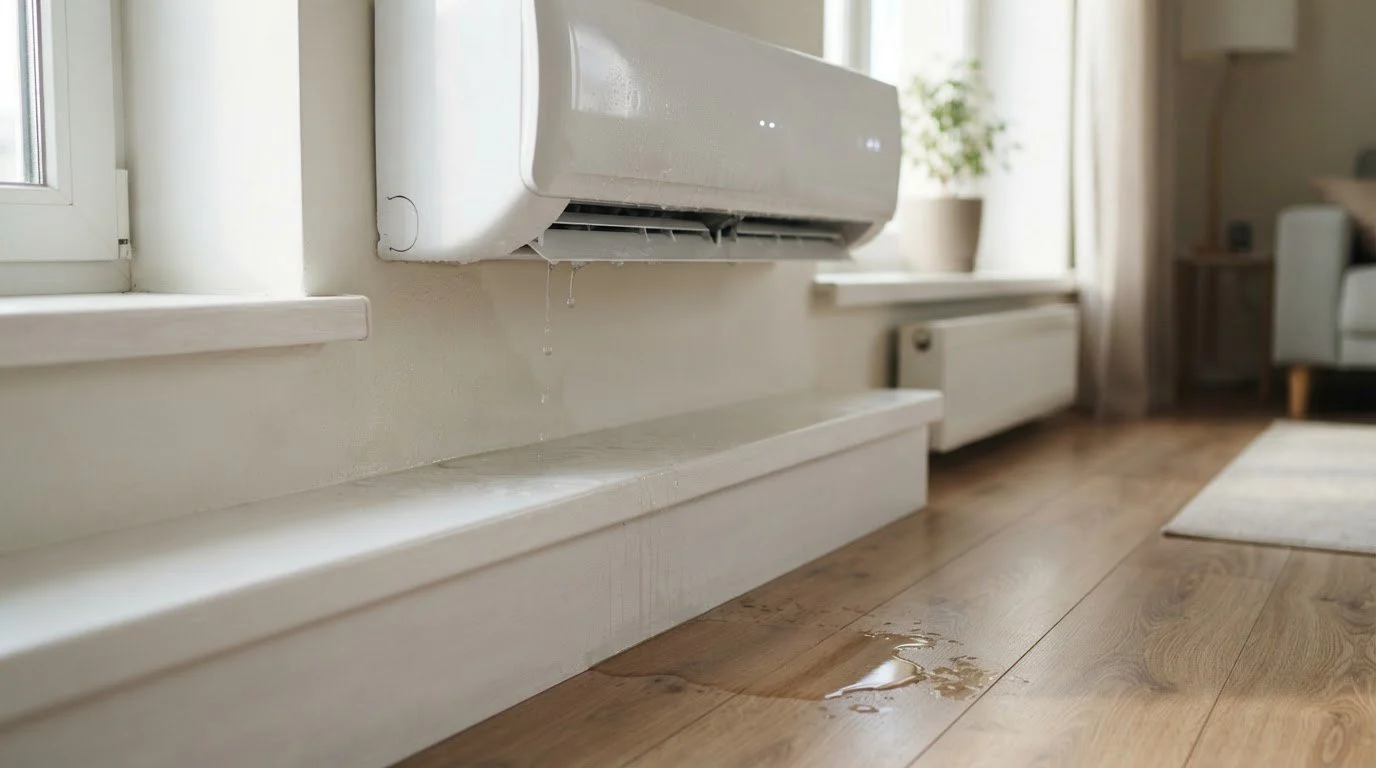
Water dripping into the room is condensation going the wrong way. A tilt, a blocked drain or a frozen coil are the usual reasons, and most can be spotted from the outside.
A damp patch on the floor under the window, a drip down the wall, or a puddle in a portable unit’s base: water indoors is one of the most common complaints about room air conditioners. The unit pulls moisture out of the air, and the coil it condenses on is cold. That water has to run to a pan and out through a drain at the back. Anything that interrupts that path puts the water in your room instead.
Condensation forms on the cold front coil and drips into a base pan. Many window units then splash or drain that water over the outdoor coil to help cool it, and let the rest run out through a drain hole or channel on the rear. A through-the-wall unit does the same through its sleeve. A portable unit collects water in an internal reservoir or pushes it out through a drain hose. If any of those routes is blocked, tilted wrong or overwhelmed, the water finds another way out.
Do not open the cabinet to reach the pan, and do not drill extra drain holes. Water near an outlet and plug is a hazard. If water has reached the outlet, the cord or the power strip, switch off the breaker before touching anything, and keep the unit off until a technician has looked at it.
In many Bay Area buildings, windows are narrow double-hung sashes that slope inward, and the sill may not be level. A unit set into such a sill can lean the wrong way without anyone noticing. Through-the-wall units depend on a sleeve that must be sound and pitched slightly outward; a cracked sleeve or one stuffed with old insulation can cause an indoor leak even on a perfectly good unit. If you rent, tell your landlord or property manager about a sleeve problem rather than adjusting it yourself.
Leaks and weak cooling often come together, because a freezing coil does both. If the room is warm as well as wet, read about a room air conditioner that runs but doesn’t cool. If the drip appears only on the hottest, most humid days and stops when the weather cools, a partly blocked drain is likely.
Until the cause is found, keep the unit off, set a towel and a shallow tray under the front, and move rugs, books and anything that soaks up water away from the sill. Mop up any damp wall base promptly, because a slow drip can lift paint and swell trim. If the unit sits above a shared floor in a condo or an upstairs flat, let the property manager know early so a neighbor below does not discover a stain first.
The same checks apply to the room air conditioners, such as the FHTC105WC1, FHTC145WC2 and FHWC056TF1. The label is usually on the side panel or behind the front grille. Our Frigidaire air conditioners guide shows how window, wall and portable units differ.
A technician checks how the unit sits, traces the water path from coil to pan to drain, looks for ice and for cracks in the pan or seal, and runs the unit to see where the water goes. If the cause is a part, such as a cracked pan or a failed fan motor that lets the coil freeze, you receive a written estimate before any repair. Nothing is repaired without your approval. See Frigidaire air conditioner repair for what to expect, and keep the model number ready.
Yes, slightly toward the outdoors. That slope lets condensation run out. A level or inward tilt sends water into the room.
Humid air gives up more moisture, so the unit makes more water than a small or partly blocked drain can carry away. Clearing the drain and checking the tilt usually helps.
As a short-term way to protect the floor, yes. It does not fix the cause, and a recurring leak can damage the sill and wall.
A little moisture may collect on the coil, but water running into the room is not normal. Check the tilt, filter and drain.
Water near an outlet or cord is. Switch off the breaker before touching anything, keep the unit unplugged, and have it checked if water reached the plug.
Share a few details and we’ll confirm an appointment. Prefer to talk? Call us and we’ll help right away.